The first 10 minutes
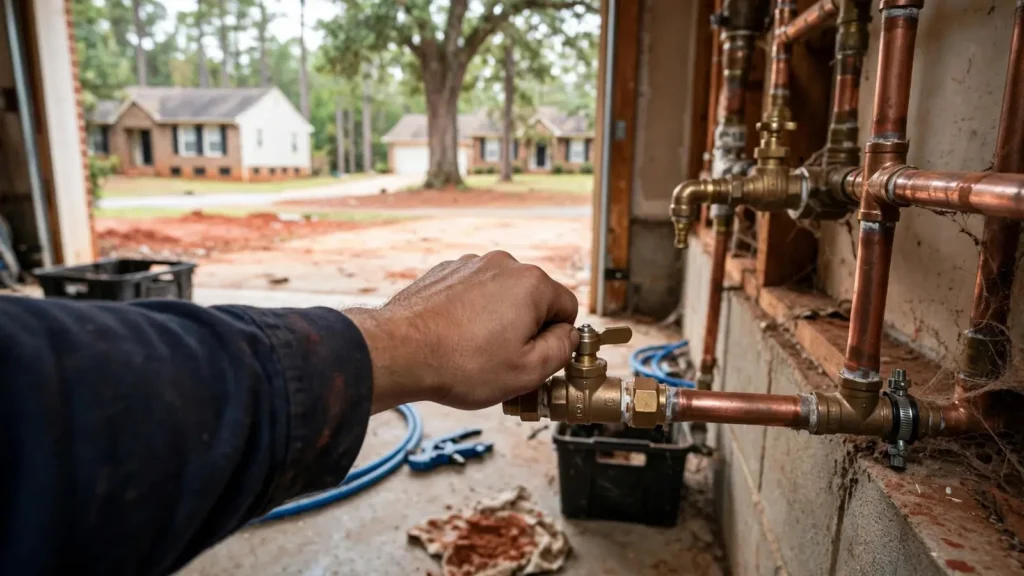
- Shut off the main water valve. Turn it clockwise (a round handle) or a quarter turn (a lever) until it stops. If you can't find it in two minutes, use the curb valve in the meter box (steps below).
- Turn off the water heater. For an electric tank, switch off its breaker so the elements don't burn out in an empty tank (why that matters). For a gas tank, turn the control knob to "Pilot".
- Drain the lines. Open the lowest cold faucet in the house (often a tub or an outdoor hose bib) and flush a toilet, so water stops pushing out of the break.
- Cut power to wet areas. If water is near outlets, a ceiling light or the electrical panel, switch off that circuit at the breaker, but only if you can reach the panel without standing in water. If you can't, stay out and call the power company.
- Photograph everything, then start drying. Take pictures and video of the break, the water and damaged items before you move them. Your insurer will ask for them.
Where your shut-off valve is in a Greenville-area home
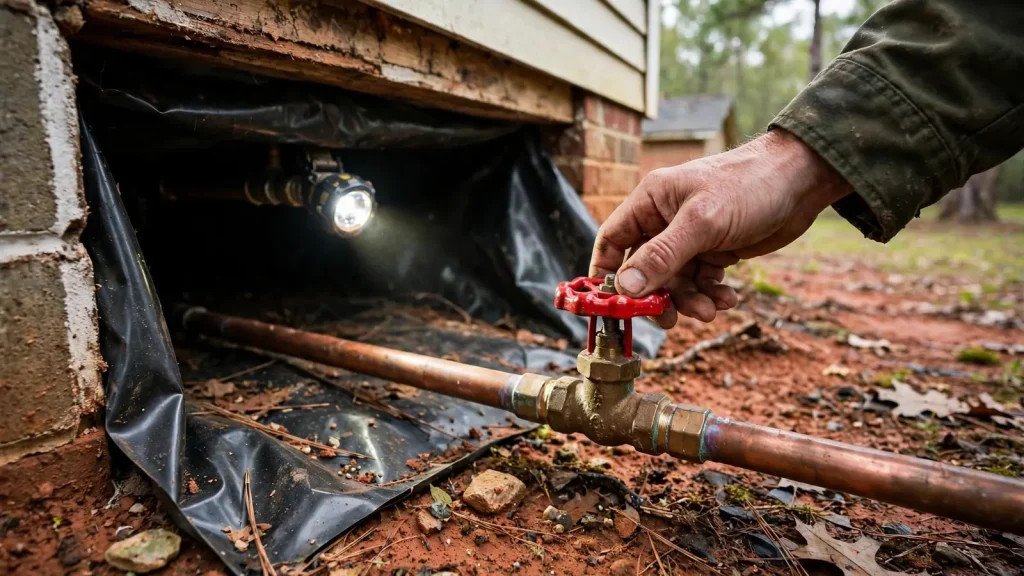
If you can't find the main valve
Go to the meter box at the street. Lift the lid carefully (it may be heavy), and turn the curb valve on the street side of the meter a quarter turn so the handle sits crosswise to the pipe. Many curb valves need a meter key, which costs about $10–$20 at a hardware store and is worth keeping in the garage. If the valve won't move or the leak is in the meter box itself, call Greenville Water's around-the-clock line at (864) 241-6000 (Greer CPW customers: the number on your bill).
Is the burst on your side or the utility's?
| Where the water is coming from | Usually whose job |
|---|---|
| Water main in the street, or water bubbling up on the street side of the meter | The utility: Greenville Water (864) 241-6000, or Greer CPW |
| Inside or right at the meter box | Call the utility first; they'll say if it's theirs |
| Wet yard between the meter and the house | Your service line, so a plumber (see water line repair) |
| Anything inside the house, crawlspace or walls | A plumber |
Pipe burst inside a wall or ceiling
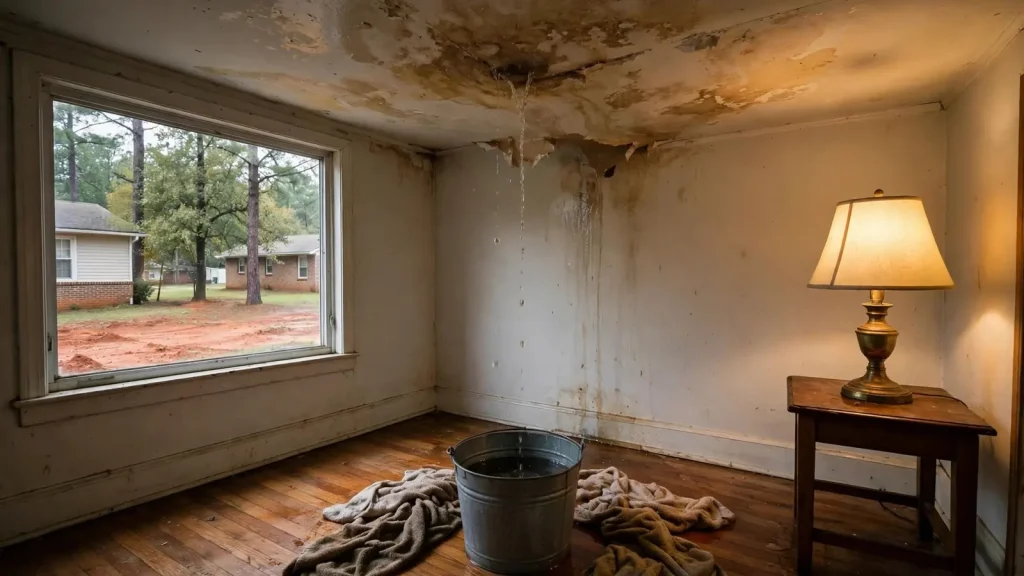
Signs: a bulging or stained ceiling, paint bubbling, a wet baseboard, or the sound of running water when nothing is on. Shut off the main first, then put a bucket under any sag and poke a small hole at its lowest point with a screwdriver. That lets the water drain in one controlled spot instead of bringing down a larger section of ceiling. Don't turn on lights in a wet ceiling.
The plumber will open the wall or ceiling only as far as needed to reach the break, usually a 1–2 foot section. Drywall repair and painting are separate jobs; some plumbers do a rough patch, and most leave finish work to a drywall contractor.
What a burst pipe repair costs in Greenville
Greenville Water says burst-pipe repairs start around $400 (Jan 2026). That's a reachable pipe, such as a crawlspace line or an outdoor hose bib, fixed in one visit. The price climbs with:
- Access: crawlspace is the cheapest; inside a finished wall or ceiling costs more; under a slab foundation is the most expensive, because the floor or a reroute is involved.
- Pipe material: PEX and copper repairs are routine. Galvanized pipe often can't be patched cleanly, so a section gets replaced. In 1960s–70s homes this can turn into a repipe conversation.
- Timing: nights, weekends and holidays usually cost more. National guides put the after-hours premium at 1.5–3 times the daytime rate.
- How many breaks: after a hard freeze, it's common to find a second split once the water is turned back on.
Before work starts, ask for a written price that covers parts, labor and any access opening, and ask whether there's a trip fee.
How long the repair takes
A single break in an accessible spot is often fixed in an hour or two once the plumber is on site. Wall and ceiling repairs take longer because of opening and closing access. After a major freeze, the wait is the main delay rather than the repair: after the December 2022 cold snap, Greenville Water logged 290 emergency service orders inside city limits in four days (Post and Courier).
Insurance: what to do so a claim goes smoothly
- Photograph and video the break, the water and damaged items before cleanup, with timestamps.
- Keep the broken piece of pipe if the plumber removes it.
- Get an invoice from the plumber that states the cause (for example, "frozen and split supply line in crawlspace").
- Start drying right away. Policies generally expect you to prevent further damage, and most homeowners policies cover sudden, accidental water damage but not long-term leaks. Check your own policy and ask your agent; coverage varies.
Drying out and preventing mold
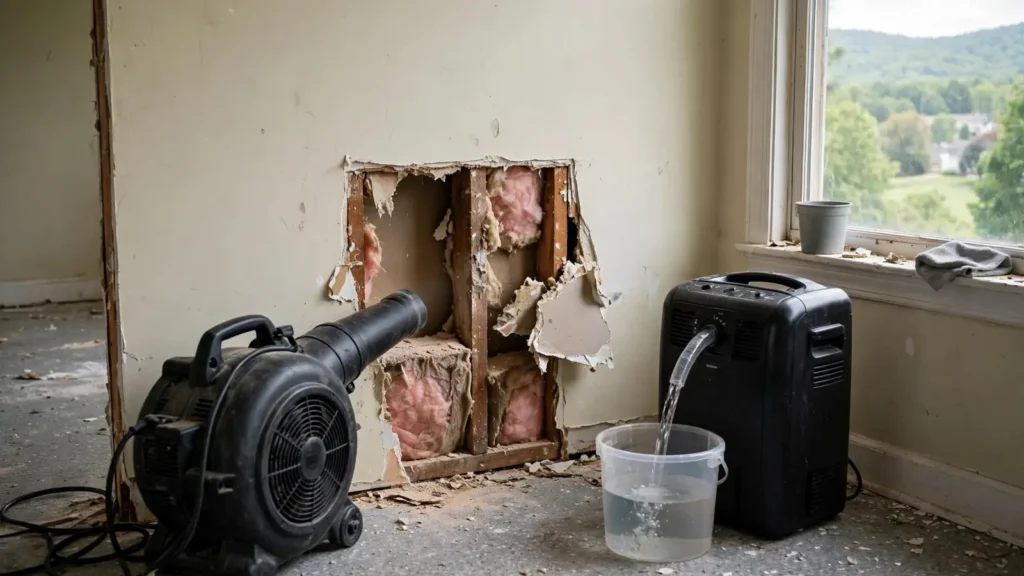
Mop and wet-vac standing water, then run fans and a dehumidifier. Pull up wet rugs and open cabinet doors. Wet drywall and insulation that stay damp for more than a day or two invite mold. For large areas, soaked insulation in a crawlspace, or water under flooring, a water-damage restoration company can measure moisture and dry the structure properly.
Why pipes burst in the Upstate
Most bursts here come from cold, not age. Greenville rarely stays below freezing for long, so many houses have pipes in crawlspaces, exterior walls and attics that aren't built for a hard freeze. Greenville Water warns that problems start when temperatures drop below 20°F. Recent examples: the December 2022 Christmas freeze, January 2025 (the area's second-coldest January since 2000), and Winter Storm Fern in late January 2026, when the utility warned of overnight lows in the teens all week. Older galvanized pipe, which corrodes from inside, and high water pressure in some newer subdivisions also cause failures. Our frozen pipes guide covers prevention.
Need the break fixed?
Burst pipe questions
How long does it take to fix a burst pipe?
A single break in a crawlspace or other open spot often takes an hour or two once the plumber arrives. Breaks inside walls, ceilings or under a slab take longer because of access. After a big freeze, the wait for a plumber is usually longer than the repair itself.
Is the burst on my side or the utility's?
Generally, the utility handles the water main and the meter, and the homeowner handles the service line from the meter to the house and everything inside it. If water is coming up at the street or in the meter box, call Greenville Water at (864) 241-6000 or Greer CPW first.
Should I turn the water back on to check for more leaks?
Only once the plumber is there, or after the known break is repaired. Turn it on slowly and have someone watch the crawlspace, ceilings and walls, because freezes often cause more than one split.
Can I use a space heater or hair dryer on a frozen pipe that might have burst?
Gentle heat from a hair dryer is fine on exposed pipe, but shut the main first in case the pipe has already split. Never use an open flame or torch, and keep space heaters away from anything flammable.
Will homeowners insurance cover a burst pipe?
Most policies cover sudden, accidental water damage, such as a pipe that bursts in a freeze. They often exclude slow leaks or damage from not heating the home. Check your policy and call your agent early, with photos and the plumber's invoice.
Why does my water heater need to be turned off?
With the main off, the tank can drain or lose pressure. An electric tank's elements can burn out if they run without water around them, and a gas tank shouldn't fire on an empty or draining tank. Turn it back on only after the water is restored and the tank is full.
Sources
- Greenville Water: freeze guidance and burst-pipe repair note (Jan 2026); 2024 freeze advice (temperatures below 20°F). greenvillewater.com
- Post and Courier: "SC utility crews scramble for days…" (Dec 2022), on 290 emergency service orders inside City of Greenville limits.
- SC Public Radio and the SC State Climatology Office: January 2025 temperatures at GSP.
- Greenville Water advisories and SC Daily Gazette coverage of Winter Storm Fern (Jan 2026).
- National cost guides (Angi, 2026) for the after-hours premium.
Page history
October 2026: first published.