Where is the clog? A quick test
| What you see | Likely location | What to do |
|---|---|---|
| One sink drains slowly; everything else is fine | The sink's trap or branch line (hair, soap, grease) | Plunge it or clean the trap; call if it doesn't clear |
| One toilet clogs repeatedly | The toilet itself or its branch | Use a toilet auger; repeated clogs may mean an object stuck in the trap |
| Tub and toilet in the same bathroom both slow | The shared branch line | Call a plumber to cable the branch |
| Water comes up in the shower when the toilet flushes or the washer drains | The main line | Stop using water and call. Don't keep flushing |
| Sewage at the lowest drain in the house, or at the yard cleanout | The main line or the sewer lateral | See sewage backing up below |
What you can safely try first
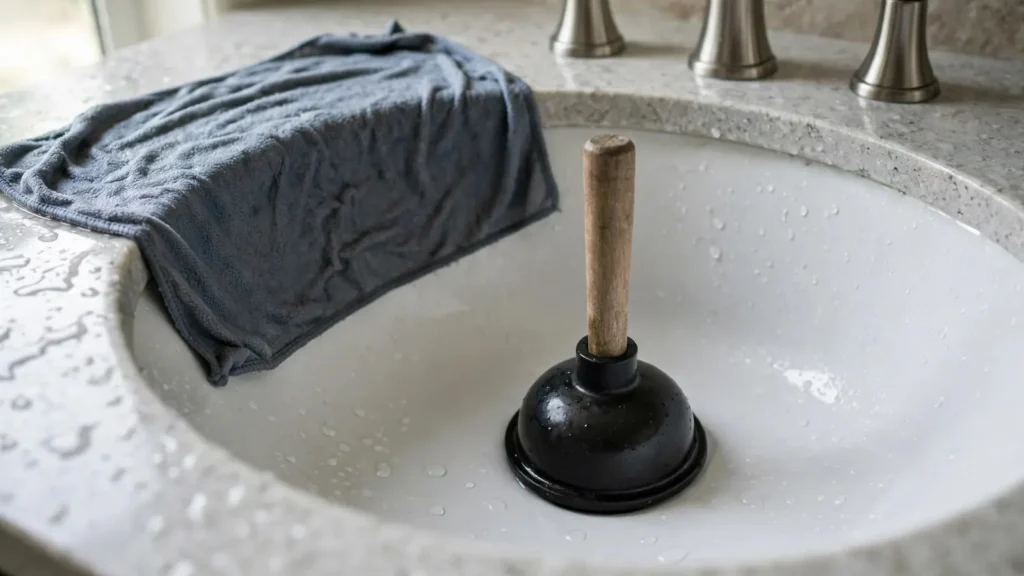
- Use a plunger with a good seal. A cup plunger for sinks and tubs, a flange plunger for toilets. Block the overflow hole on a sink or tub with a wet rag so the pressure goes down the drain.
- Clean the sink trap. Put a bucket under the U-shaped pipe, unscrew the slip nuts, and clear it. Many bathroom sink clogs are a hair mat right there.
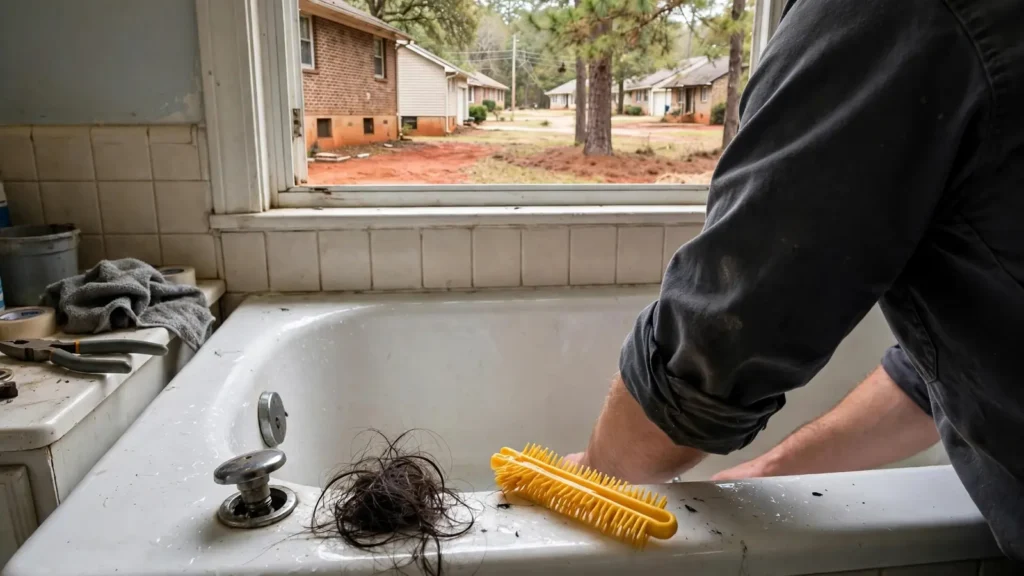
- Pull the tub stopper and clear hair from it with a plastic drain tool.
- Hot water, not boiling, for a slow kitchen drain. Boiling water can soften PVC joints and crack porcelain.
Drain still blocked? Call a local plumber
How plumbers clear drains: cabling vs jetting
Cabling (snaking)
- A spinning steel cable with a cutting head bores through the clog.
- Good for most fixture clogs and for cutting through roots in a main line.
- Opens a channel but may leave grease or roots on the pipe walls, so the clog can return.
Hydro jetting
- High-pressure water scours the whole inside of the pipe.
- Better for grease buildup and heavy root growth; usually costs more, about $350–$600 on national figures.
- A plumber should check the pipe's condition first: jetting old, cracked clay or Orangeburg pipe can make a weak section worse.
For a main line that keeps clogging, ask for a camera inspection along with the cleaning. It shows whether you're dealing with roots, a sag, a break or simple buildup, and that decides whether the next step is maintenance or a sewer line repair.
Sewage backing up? Who to call first
If sewage is coming up into the house, stop running water, keep people and pets away from it, and work out who your sewer provider is from your bill.
- MetroConnects customers (most of unincorporated Greenville County, Travelers Rest, Piedmont): MetroConnects' lateral policy says owners should contact MetroConnects first in a sewer emergency or backup, at (864) 277-4442. If its crew finds the problem on its side, it fixes it. If it can't tell, it may tell you to call a licensed plumber. Calling a plumber first can disqualify you from reimbursement if the problem turns out to be in MetroConnects' part of the line.
- City sewer customers (inside the City of Greenville, Simpsonville, Mauldin, Fountain Inn, or Greer CPW sewer): call your city or CPW to check the main, then a plumber for the private line.
- On septic: a plumber or septic company.
Our sewer backup guide covers cleanup and insurance, and our who-owns-the-line guide shows where your responsibility starts and how MetroConnects reimbursement works.
What usually causes drain clogs here
- Grease in kitchen drains. It goes down warm and sets up cold in the pipe. Wipe pans and put cooking fat in the trash, especially around the holidays.
- Wipes, including "flushable" ones. They don't break down like toilet paper and snag in main lines and pumps.
- Roots in older laterals. Clay sewer pipe, common in homes built before the 1980s, has joints that roots find. Mature oaks and pines make this a regular problem in older Greenville neighborhoods.
- Hair and soap in bathroom drains.
- Storm water in the sewer. MetroConnects asks owners to disconnect sump pumps and downspouts from the sewer, since rainwater overloads the lines.
Find your cleanout before you need it
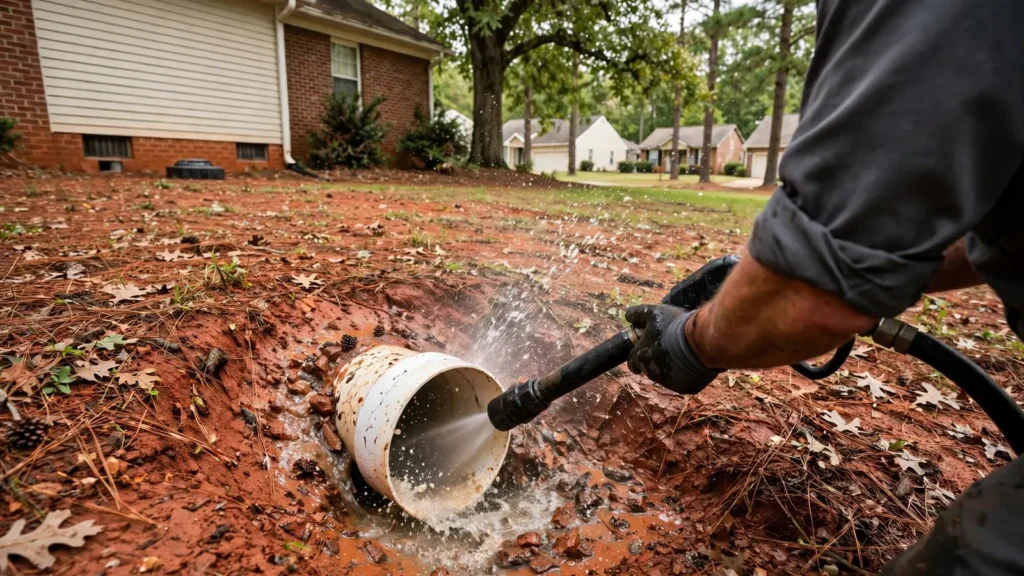
The cleanout is a capped pipe, usually 3 or 4 inches across, sticking up in the yard between the house and the street or next to the foundation. It's how a plumber gets a cable or camera into the main line without pulling a toilet. Knowing where it is saves time and money on the call. MetroConnects asks owners to keep it capped: mowers often break the caps, and an open cleanout lets rain and debris into the sewer.
If you open the cleanout cap during a backup and sewage is standing in it, the clog is between there and the street. If it's dry, the clog is between the cleanout and the house.
What drain cleaning costs in Greenville
| Job | Typical range | Source |
|---|---|---|
| Drain clog cleared | $152–$421 (average about $240) | HomeAdvisor, Greenville SC, checked Oct 2026 |
| Drain cleaning | $70–$350 | Today's Homeowner, Greer SC, Feb 2025 |
| Hydro jetting | $350–$600 (severe up to $2,000) | HomeAdvisor national guide, 2025 |
| Sewer camera inspection | About $270–$1,731 | HomeAdvisor national guide, 2025 |
Keeping drains clear
- Hair catchers in showers and tubs.
- Fat and food scraps in the trash, not the disposal.
- Only toilet paper down the toilet.
- If you have an older clay lateral with roots, ask about a maintenance cleaning schedule versus a repair. Paying for a cleaning every year can add up to the cost of fixing the bad section.
Ready to have it cleared? Call to book a visit
Drain cleaning questions
How do I know if it's the main sewer line or just one drain?
If only one fixture is slow, it's local. If several drains are slow at once, water rises in the tub or shower when you flush, or the lowest drain in the house backs up, the main line is blocked.
Are chemical drain cleaners safe for my pipes?
They're hard on older metal pipes and rarely clear a full blockage. A plunger or a cable is safer. If you've used a chemical cleaner, tell the plumber before they open the line.
Is hydro jetting better than snaking?
Jetting cleans the whole pipe wall and is better for grease and heavy roots; cabling is cheaper and fine for most clogs. Jetting fragile old pipe can damage it, so a camera check first is wise.
Who do I call first when sewage backs up in my house?
If MetroConnects is your sewer provider, call it first at (864) 277-4442; its policy says owners should contact it before a plumber in a backup. City or CPW sewer customers should call their provider to check the main, then a plumber.
Where is my sewer cleanout?
Usually a capped 3- or 4-inch pipe in the yard between the house and the street, or close to the foundation. Older homes sometimes have one only inside, or none at all, and a plumber can add one.
Can tree roots really get into sewer pipes?
Yes, especially older clay pipes, where roots enter through the joints. They're the most common cause of repeat main-line clogs in older neighborhoods.
Sources
- MetroConnects Lateral Maintenance Policy (adopted July 17, 2023), sections 5–9; "Inspecting Lines and Capping Cleanouts" (Feb 2023). metroconnects.org
- HomeAdvisor (Greenville, SC) drain clog costs; HomeAdvisor national hydro jetting and sewer inspection guides (2025); Today's Homeowner (Greer, SC), Feb 2025.
- Census ACS 2020–2024 5-year estimates (housing age by area).
Page history
October 2026: first published.