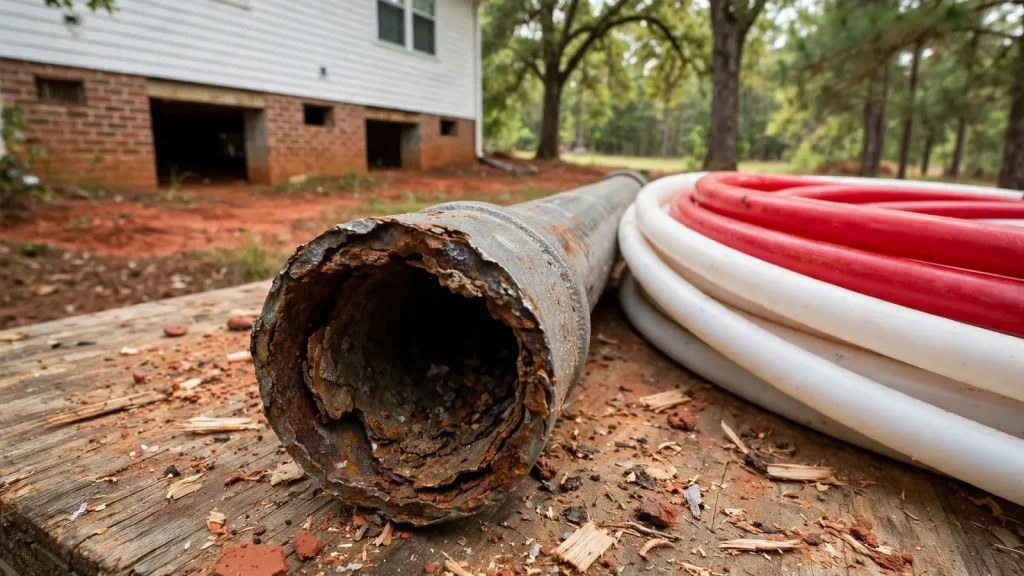
When it's time to repipe
- Repeat leaks, several in a year or two, especially pinholes in copper or at galvanized threads.
- Low pressure at every faucet, not just one.
- Brown or rusty water after the water sits.
- Polybutylene (gray plastic, often stamped "PB"), common in homes built about 1978–1995.
- Before a big remodel, while walls are open anyway.
- An insurer or buyer flags galvanized or polybutylene pipe.
PEX or copper?
| PEX | Copper | |
|---|---|---|
| Cost | Lower; faster to install | Higher material and labor cost |
| Install | Flexible runs with fewer fittings; fewer wall openings | Rigid; more joints and more wall openings |
| Freeze tolerance | Can expand slightly, so less likely to split | More likely to split in a hard freeze |
| Limits | Must be kept out of sunlight; not for outdoor exposed runs | Can pinhole in some water conditions over time |
Thinking about a repipe? Get a price
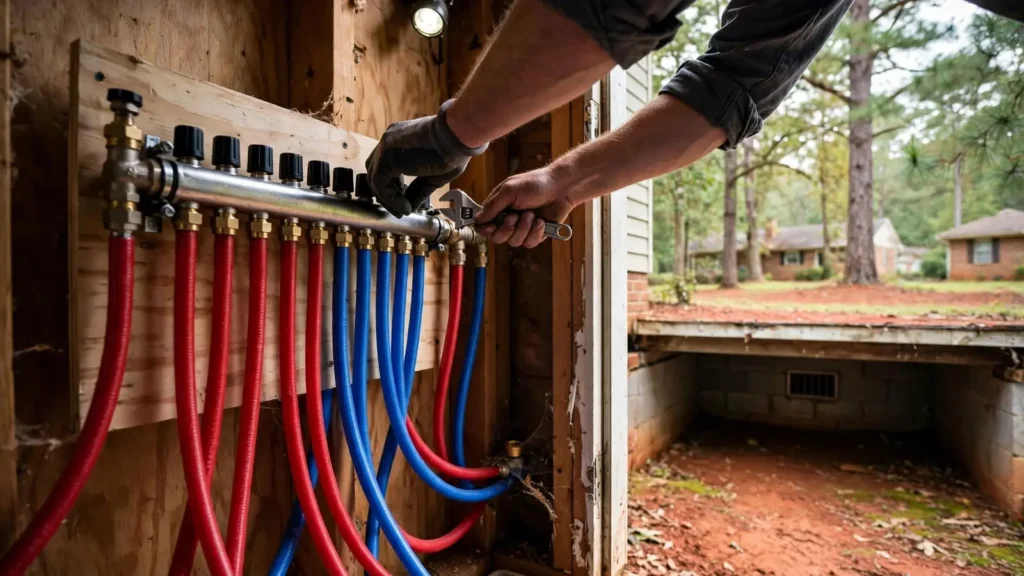
Why crawlspace homes cost less
Many 1950s–1980s homes in Taylors, Wade Hampton, Berea and the mill villages sit on crawlspaces. A plumber can run new PEX under the floor and up into each fixture with only small wall openings. On a slab, lines often have to go through walls and the attic instead, which means more drywall repair. Ask whether drywall patching and painting are in the price; many plumbers patch but don't paint.
Repipe costs
| Job | Typical range | Source |
|---|---|---|
| Whole-house repipe | $4,500–$15,000 | National repipe guides, 2026 |
| Partial repipe (rerouting) | $595–$1,275 | Today's Homeowner, Greer SC, Feb 2025 |
| Leaking pipe repair | $105–$315 | Today's Homeowner, Greer SC, Feb 2025 |
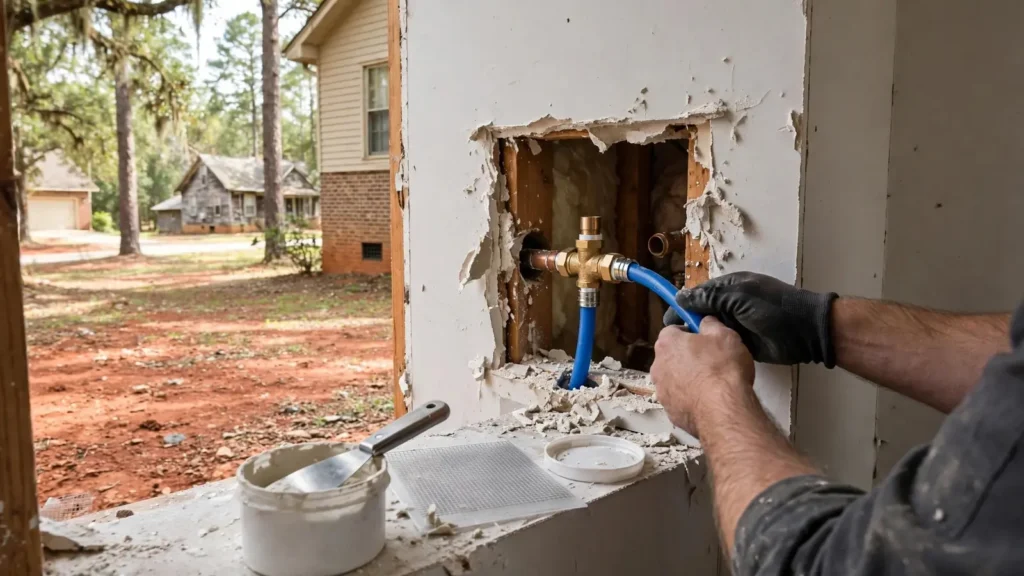
What a repipe involves
- Walkthrough and written price, including the permit and wall repair.
- Permit from your city or Greenville County Building Safety, (864) 467-7060.
- New lines run from the main to each fixture while the old system stays in use where possible.
- Switch-over: water off for a few hours while fixtures are connected to the new lines.
- Pressure test and inspection.
- Wall patching, then the old pipe is capped or removed.
Many homes are repiped in two to four days, with water available most evenings.
Partial repipe on a budget
If one run is failing, such as the line to a bathroom or the main line into the house, replacing just that section can buy years. It's a fair choice if the rest of the pipe is sound, but ask the plumber how the remaining pipe looks. Our older homes guide shows how to identify each pipe type.
Ready to replace old pipes?
Repiping questions
How long does it take to repipe a house?
Often two to four days for a typical home, with the water off only for a few hours during the switch-over. Larger homes or slab homes can take longer.
Is PEX better than copper for repiping?
For most homes, PEX is cheaper and faster to install, needs fewer wall openings and handles freezes better. Copper is still a solid choice if you prefer it and the budget allows.
Can I live in my house during a repipe?
Usually, yes. The water is shut off for parts of the day, and there will be small wall openings, but most families stay home.
Does a repipe need a permit in Greenville County?
Yes, normally. Inside a city, the city's building department issues it; in unincorporated areas, Greenville County Building Safety does. The plumber usually pulls it.
Does homeowners insurance pay for repiping?
Generally not, because it's replacing worn-out pipe. Insurance may cover sudden water damage from a burst, but not the repipe itself.
Should I replace polybutylene pipe even if it isn't leaking?
Many owners do, because polybutylene fittings tend to fail without warning and some insurers ask about it. If you're selling or renovating, it's a good time to replace it.
Sources
- National repipe cost guides (2026); Today's Homeowner (Greer, SC, Feb 2025).
- Census ACS 2020–2024 5-year estimates (housing age by area).
- Greenville County Building Safety residential plumbing permits.
Page history
October 2026: first published.