How cold before pipes freeze here?
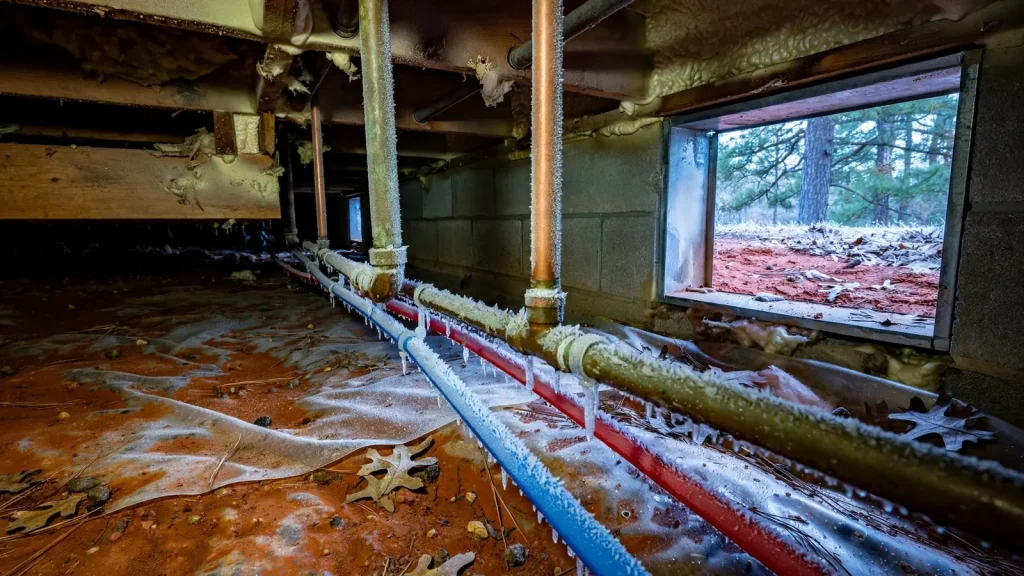
Greenville's average January low is just above freezing, around 31–33°F (NWS normals, 1991–2020). Most winter nights are cold but not dangerous for plumbing. Trouble starts when temperatures drop into the teens, or stay below freezing for two or more days. Greenville Water's warning threshold is "below 20°F". Clemson's Home & Garden Information Center says the frost line in South Carolina is only a few inches deep, so pipes buried 12 inches should not freeze. The pipes that do freeze are the ones above ground: in crawlspaces near open vents, in exterior walls, in attics, and at outdoor faucets.
| Forecast low | Risk for typical Upstate homes | What to do |
|---|---|---|
| 28–32°F | Low: brief, light freeze | Disconnect hoses; cover outdoor faucets |
| 20–27°F | Moderate: exposed and exterior-wall pipes | Close crawlspace vents, open sink cabinets on outside walls, drip faucets |
| Below 20°F, or 2+ days below freezing | High: crawlspace and attic pipes, mobile homes | Everything above, plus heat tape where installed, keep the heat on at 55°F or higher, and know where your shut-off is |
Prevention checklist before a hard freeze
- Drip faucets on exterior walls, both hot and cold, a thin, steady drip. Greenville Water notes a dripping faucet uses about a gallon a day; at about $2.43 per 1,000 gallons, that's pennies.
- Open the cabinet doors under kitchen and bathroom sinks on outside walls so house heat reaches the pipes.
- Close the crawlspace vents (or block them with foam vent covers) for the cold spell, then reopen them when it warms up, to control moisture.
- Keep the heat at 55°F or higher, even if you're away. Greenville Water recommends no lower than 55°F.
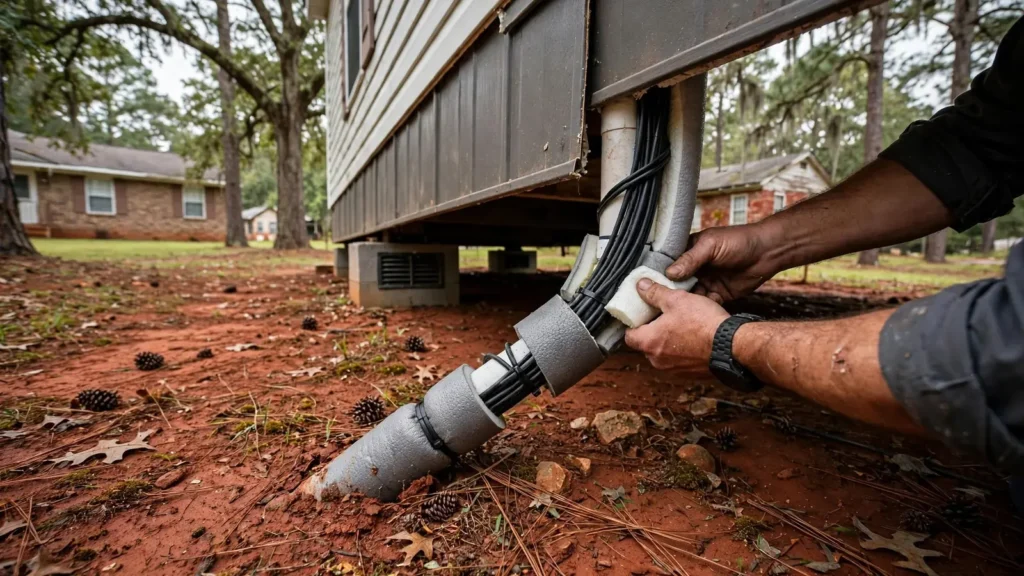
- Insulate exposed pipes in the crawlspace, garage and attic with foam sleeves. They're cheap, quick to fit, and work best on the lines nearest vents and outside walls.
- Check heat tape on manufactured homes and well lines: plug it in and make sure the thermostat light comes on before the cold arrives.
- Know your shut-off. Find it now, when nothing is leaking. Where it usually is.
Outdoor faucets and hose bibs
Outdoor faucets are the most common freeze casualty in Upstate homes. A connected garden hose holds water in the faucet body. When it freezes, the pipe can split just inside the wall, and you won't see it until you turn the faucet on in spring and water pours into the crawlspace or wall.
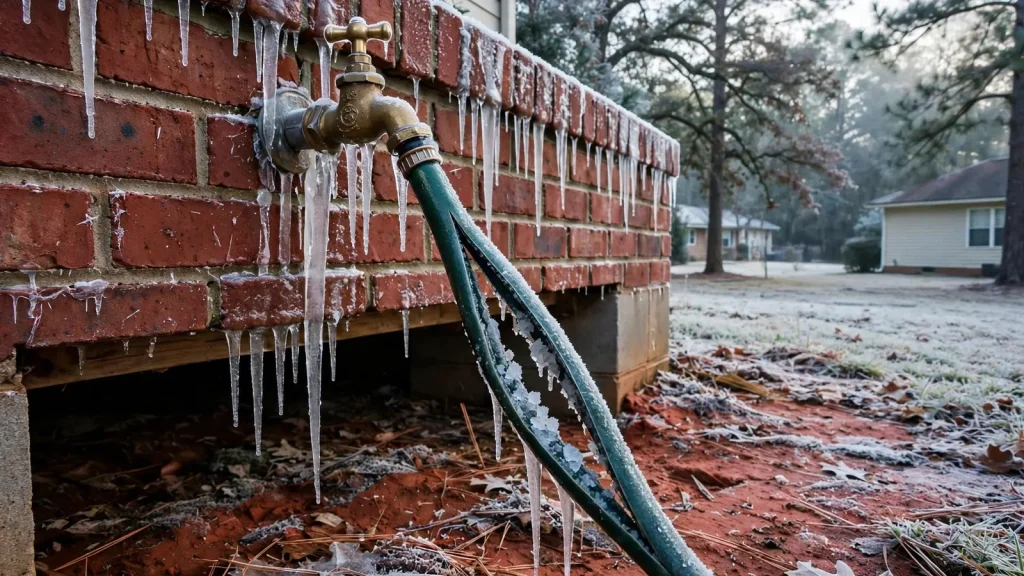
- Disconnect every hose and drain it.
- If there's an indoor shut-off for the outdoor faucet (often in the crawlspace or basement), close it, then open the outdoor faucet to drain the line.
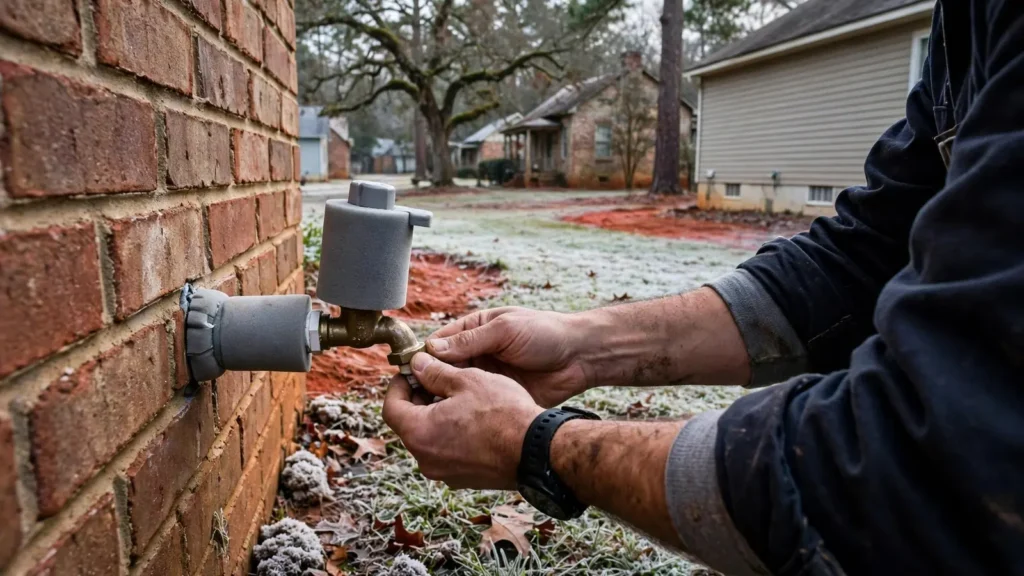
- Fit an insulated faucet cover, a foam dome that costs a few dollars.
- Frost-free faucets (long-stem sillcocks) only work if the hose is off and the faucet tilts slightly toward the outside.
Thawing a frozen pipe safely
Signs of a frozen pipe: a faucet that gives only a trickle or nothing on a cold morning, frost on an exposed pipe, or a bulge in the pipe.
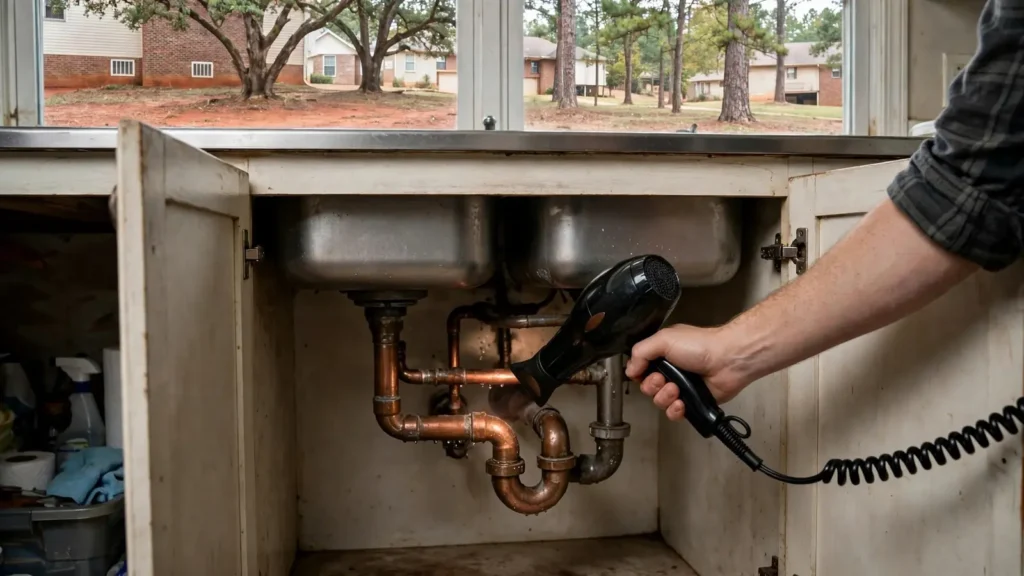
- Open the faucet that pipe feeds, so melting water has somewhere to go and pressure can escape.
- Warm the pipe slowly with a hair dryer, a heating pad, or warm towels, starting from the faucet end and moving back toward the frozen section.
- Never use an open flame, torch, or a kerosene or propane heater in a crawlspace. They start fires, and copper can be damaged by sudden heat.
- Keep heating until full pressure returns, then check along the pipe for drips. A pipe can split while frozen and only leak once it thaws.
- If you can't reach or find the frozen section, or it's inside a wall, call a plumber. If it has already split, shut off the main water first.
Recent Upstate freezes and what they did
| When | What happened | Plumbing impact |
|---|---|---|
| Dec 23–26, 2022 | Christmas arctic freeze | Greenville Water logged 290 emergency service orders inside City of Greenville limits in four days, mostly shutting off water for burst or leaking pipes (Post and Courier) |
| Sep 26–27, 2024 | Hurricane Helene | About 275,000 Greenville County power outages. Greenville Water reported no service interruptions. Homes on wells and sump pumps lost them with the power |
| Jan 2025 | Snow Jan 10, ice storm Jan 21–22 | GSP's second-coldest January since 2000 (SC State Climatology Office) |
| Jan 23–30, 2026 | Winter Storm Fern | Greenville Water warned of overnight lows in the teens all week; insurers expected significant burst-pipe claims (SC Daily Gazette) |
Which Greenville County homes freeze most?
Three kinds of houses come up again and again:
- Crawlspace homes from the 1950s–80s, such as much of Taylors, Wade Hampton and Berea. Supply lines run near foundation vents, and older homes have less insulation.
- Manufactured homes. In Piedmont about 26%, and in Conestee and Slater-Marietta even more, of housing units are mobile or manufactured homes (Census ACS 2020–2024). Their pipes run under the floor behind skirting, so damaged skirting and failed heat tape are the usual culprits. Check the skirting for gaps and the heat tape before each cold spell.
- Foothill homes north of Travelers Rest, where it gets colder at night, and homes with well lines and pressure tanks in unheated sheds.
Greer CPW customers
If your water comes from Greer CPW rather than Greenville Water, the advice is the same. CPW publishes its own frozen-pipe prevention guide each fall; check greercpw.com for current advice and the emergency number on your bill.
When to call a plumber
- You can't find or reach the frozen section, or it's inside a wall or ceiling.
- You thawed a pipe and see drips, a bulge or a split.
- No water anywhere in the house, but neighbors have water. That points to a frozen service line or a problem near your meter.
- Water is coming through a ceiling or wall: shut off the main first, then call.
Need a plumber for a frozen pipe?
Frozen pipe questions
At what temperature do pipes freeze in Greenville, SC?
Water freezes at 32°F, but most Upstate pipes don't freeze until the air around them stays well below that. Greenville Water warns that the risk becomes serious below 20°F, especially overnight and for pipes in crawlspaces, exterior walls and attics.
Should I drip both hot and cold faucets?
Yes, on faucets along exterior walls. A slow drip of both keeps water moving in both lines. Greenville Water estimates a dripping faucet uses about a gallon a day.
Should I close my crawlspace vents in winter?
Close them, or cover them, during freezing weather; Greenville Water recommends it. Reopen them once the cold passes, because crawlspaces need ventilation to control moisture the rest of the year (unless yours is sealed and conditioned).
How long does it take a frozen pipe to burst?
There's no set time. A pipe usually bursts after hours of freezing as ice builds pressure between the frozen section and a closed faucet. Opening the faucet relieves that pressure, which is why dripping works.
Can I leave town for the holidays without draining my pipes?
Keep the heat at 55°F or higher and open sink cabinets on outside walls. For longer trips during a hard freeze, shutting off the main and draining the lines is the safest option. Ask someone to check the house if a cold snap is forecast.
My manufactured home's pipes froze. Where do I start?
Check the skirting for gaps and the heat tape for power first. Then warm the pipes slowly from the faucet end with a hair dryer or heating pad, never an open flame under the home. If you can't reach them or see any split, shut off the water and call a plumber.
Sources
- Greenville Water: freeze guidance (Jan 16, 2024; Jan 2026), rate and drip-cost figures, Winter Storm Fern advisory (Jan 21, 2026). greenvillewater.com
- Clemson Cooperative Extension, Home & Garden Information Center: frozen pipes factsheet (frost line and bury depth). hgic.clemson.edu
- National Weather Service Greenville-Spartanburg: 1991–2020 normals and records.
- Post and Courier: December 2022 freeze coverage.
- SC State Climatology Office and SC Public Radio (Feb 2, 2025); SC Daily Gazette (Jan 26, 2026); WIS and Post and Courier coverage of Helene (Sep–Oct 2024).
- U.S. Census Bureau ACS 2020–2024 5-year estimates, table B25024 (units in structure).
Page history
October 2026: first published.