Taylors at a glance
| ZIP code | 29687 |
|---|---|
| Type of place | Unincorporated community (Census-designated place), Greenville County |
| People / homes | About 24,500 people in about 10,600 housing units |
| Median year homes were built | 1983, with 38% built from 1960 to 1979 |
| Owner-occupied | 74% |
| Water | Greenville Water for most addresses (around-the-clock line (864) 241-6000). Some eastern edges may be Greer CPW, so check your bill |
| Sewer | MetroConnects (the old Taylors Sewer District merged into Metro in 2022): (864) 277-4442 |
| Permits | Greenville County Building Safety, (864) 467-7060 |
Why Taylors' 1960s–70s homes drive most plumbing calls here
Taylors grew fast in the 1960s and 1970s along Wade Hampton Boulevard and the roads off it, and that shows in the numbers. About 20% of today's homes were built in the 1970s and 18% in the 1960s. Next door, in the Wade Hampton area, the median home dates from 1973. Homes of that age were commonly plumbed with galvanized steel supply lines and cast-iron drains. Many have been partly updated since, but rarely all at once.
What that means in practice, by when your home was built:
| Built | Supply pipe you might find | Drains and sewer line | Watch for |
|---|---|---|---|
| 1960s–1970s | Galvanized steel, or copper if updated | Cast iron inside; clay lateral to the street | Falling water pressure, rusty water after it sits, pinhole leaks, roots in the lateral |
| Late 1970s–mid 1990s | Copper, or gray polybutylene (common nationally 1978–1995) | PVC or ABS | Leaks at polybutylene fittings; insurers and home buyers often flag it |
| 2000s and newer | CPVC or PEX | PVC | Water heaters at the end of their life, pressure and expansion-tank issues |
Quick self-check: look at the pipes coming out of the top of your water heater or into the house in the crawlspace. Gray threaded metal pipe that a magnet sticks to is likely galvanized. Copper is orange-brown. Gray flexible plastic stamped "PB" is polybutylene. Red, white or blue flexible plastic is PEX.
Repipe or repair?
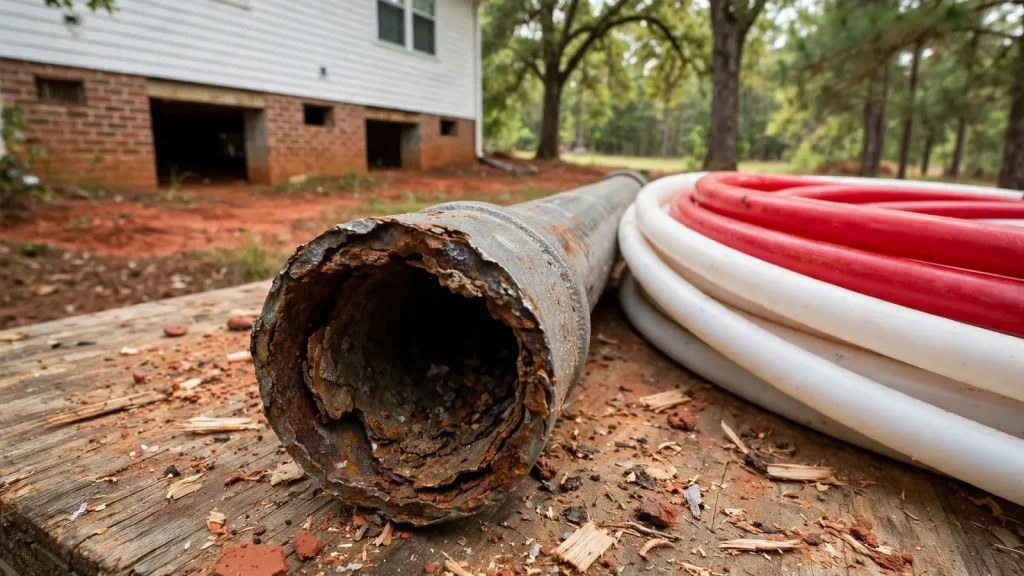
One pinhole leak in a galvanized line can be fixed. Repeated leaks, rusty water and low pressure throughout the house usually mean the pipe is narrowing inside, and patching becomes a recurring bill. National cost guides put a whole-house repipe at roughly $4,500–$15,000, depending on house size and access. A crawlspace home is usually at the cheaper end because the plumber can run new PEX underneath without opening many walls. Two questions decide it: how many leaks you've had in the past few years, and whether the low pressure affects every faucet or just one. Our older homes guide shows how to tell galvanized from copper, and our repiping guide covers PEX vs copper and the process.
Talk to a plumber about your Taylors home
Taylors sewer after the MetroConnects merger
For decades Taylors had its own sewer district. In 2022 it was consolidated into MetroConnects, the sewer subdistrict that serves unincorporated Greenville County, and Metro committed about $26 million to Taylors sewer upgrades over 20 years (Post and Courier, 2022). Metro has since worked to cut stormwater leaking into Taylors sewer lines.
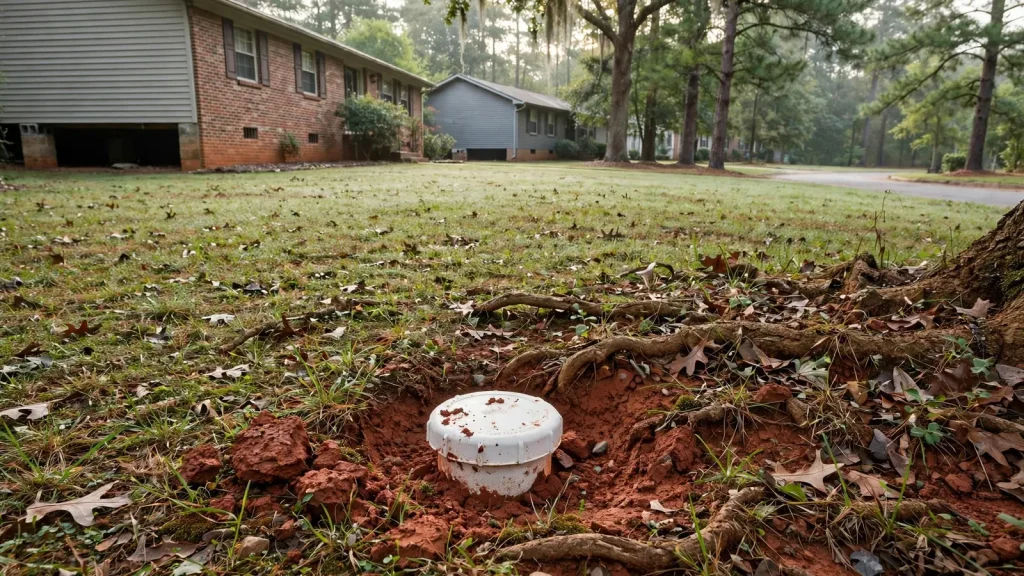
What matters for you: MetroConnects says the private lateral, the pipe from your house to the 4- to 6-inch connection at or near your property line, is the property owner's responsibility. Metro asks owners to replace old clay laterals at the end of their life and to keep the cleanout cap closed; mowers often break them. So if your drains back up, the fix is usually a plumber's job on your lateral, but call MetroConnects first: its 2023 lateral policy asks owners to, so it can rule out its own section. Details in our who-owns guide.
- Sewage coming out of a manhole or the street: call MetroConnects, (864) 277-4442.
- Backups only in your house, worst at the lowest drains: call MetroConnects first to check its side; if it's clear, call a plumber and ask for a camera inspection of the lateral.
- Cleanout cap broken or missing: replace it. It's cheap, and an open cleanout lets rainwater and debris into the line.
Who to call in Taylors
| Problem | Call |
|---|---|
| No water on your street, or a leak in the meter box | Greenville Water, (864) 241-6000 (or Greer CPW if it bills you) |
| Sewer overflowing in the street or from a manhole | MetroConnects, (864) 277-4442 |
| Leak between the meter and the house, anything inside, water heater, lateral clog | A licensed plumber |
| Permit question for a water heater or repipe | Greenville County Building Safety, (864) 467-7060 |
| Gas smell | Leave, call 911 from outside, then your gas company |
How do I find the best plumber in Taylors?
"Best" depends on the job, but these checks matter in Taylors specifically:
- A South Carolina license you can verify. Ask for the license number and look it up on the SC Department of Labor, Licensing and Regulation (LLR) website. It takes under a minute.
- Experience with older homes. Ask whether they work with galvanized-to-PEX repipes and camera-inspect clay laterals. In 1960s–70s houses, that experience saves money.
- The right permit office. A plumber who works in Taylors should know permits come from Greenville County Building Safety, not a city office.
- A written price before work starts, covering parts, labor and the permit.
- A clear trip or diagnostic fee, stated on the phone.
What plumbing costs around Taylors
| Job | Typical range | Source |
|---|---|---|
| Trip / diagnostic fee | About $45–$89 locally; sometimes waived if you hire | Greenville-area listings, 2026 |
| Drain cleaning | $152–$421 (average about $240) | HomeAdvisor, Greenville SC, 2026 |
| Burst pipe, simple repair | From about $400 | Greenville Water, Jan 2026 |
| Sewer line replacement | $60–$250 per linear foot | Angi, Greer SC, 2026 |
| Whole-house repipe | About $4,500–$15,000 | National guides, 2026 |
For 30 jobs with sources, see our Greenville plumber cost guide.
For replacements such as water heaters or a repipe in Taylors, the permit is pulled through Greenville County. Ask whether it's included in the price.
Crawlspaces and freezing in Taylors
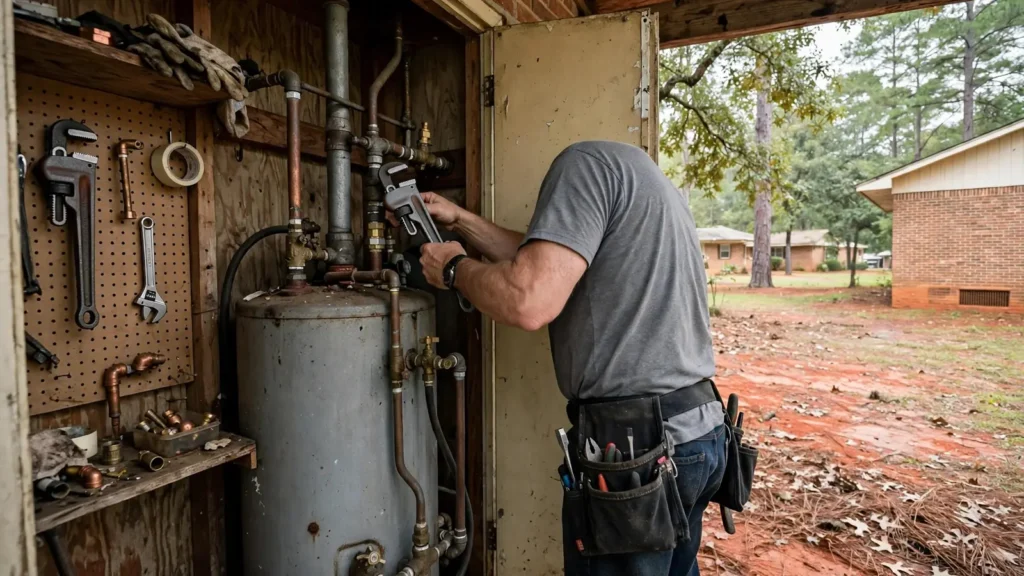
Most older Taylors homes sit on crawlspaces with foundation vents, and supply lines often run close to them. When a hard freeze is forecast (Greenville Water's warning level is below 20°F), close or cover the vents, open sink cabinets on outside walls, and drip faucets. Then reopen the vents when it warms up. Full steps are in our frozen pipes guide, and if a pipe has already split, start with what to do first.
Local notes
- Chick Springs: Taylors' origins include the Chick Springs mineral-spring resort area of the 1800s. Homes near the old village core are among the oldest in the CDP.
- Taylors Mill (the former Southern Bleachery): now a mixed-use creative hub. Mill-era houses nearby can have the oldest plumbing in town.
- Wade Hampton Boulevard (US-29): the corridor most 1960s–70s subdivisions grew from; the same era as the Wade Hampton area just south.
- Brushy Creek Road and Edwards Road: later subdivisions, many from the 1980s. That's the window to check for polybutylene.
- Lake Robinson, to the north: a Greer CPW reservoir, which is a reminder that addresses near the eastern edge may be on CPW water.
Need a plumber in Taylors?
Taylors plumbing questions
Who supplies water and sewer in Taylors?
Most Taylors homes get water from Greenville Water; some near the eastern edge are served by Greer CPW, so check your bill. Sewer is MetroConnects, which absorbed the old Taylors Sewer District in 2022.
Should I repipe a 1970s Taylors ranch?
Not automatically. Repiping makes sense if you have repeated leaks, rusty or discolored water, or low pressure at every faucet, all signs that galvanized pipe is failing inside. If the house was already updated to copper or PEX, you may only need spot repairs. A plumber can check exposed pipe in the crawlspace.
Does Taylors need a permit to replace a water heater?
Taylors is unincorporated, so permits go through Greenville County Building Safety, (864) 467-7060. The county's residential plumbing permit forms list water heaters among the fixtures that count. Confirm current rules with the county or ask your plumber to pull the permit.
My 1980s home has gray plastic pipe. Is that polybutylene?
Possibly. Gray, flexible plastic supply pipe stamped "PB" was used in many US homes built from about 1978 to 1995. It's known for leaks at the fittings, and insurers sometimes ask about it. A plumber can confirm it and price a replacement with PEX.
Who handles a sewer backup at the street in Taylors?
If sewage is coming from a manhole or the main in the street, call MetroConnects at (864) 277-4442. If it's only backing up inside your house, the problem is usually in your private lateral, but call MetroConnects first so it can rule out its section; then call a plumber.
How do I protect a Taylors crawlspace from freezing?
Before a hard freeze, close or cover the foundation vents, insulate pipes that run near them, keep the heat at 55°F or higher, and drip faucets on outside walls. Reopen the vents after the cold passes to control moisture.
Can I use this line if I live between Taylors and Greer?
Yes. The line serves homes in Taylors (29687) and in nearby Greer ZIPs. Tell whoever answers your exact address so they can confirm they cover it.
Sources
- U.S. Census Bureau, ACS 2020–2024 5-year estimates for the Taylors CDP and Wade Hampton CDP: tables B01003, B25034, B25035, B25003, B25077 (via Census Reporter). Accessed Oct 2026.
- Post and Courier: 2022 consolidation of the Taylors and Parker sewer districts into MetroConnects and the $26 million commitment.
- MetroConnects: "Inspecting Lines and Capping Cleanouts" (Feb 2023), Taylors-area infiltration work, contact information. metroconnects.org
- Greenville Water: service area, emergency line and freeze guidance. greenvillewater.com
- Greenville County Building Safety: residential plumbing permit forms. greenvillecounty.org
- HomeAdvisor (Greenville, SC), Angi (Greer, SC) and national repipe cost guides, 2026.
Page history
October 2026: first published.