The first hour, step by step
- Stop the water going in. No flushing, showers, laundry or dishwasher. Every gallon you use comes back up at the lowest drain. Tell everyone in the house.
- Keep clear of the water. Sewage carries bacteria and viruses. Keep children and pets out of the area. If you must go in, wear rubber boots and gloves.
- Mind the electricity. Don't walk through standing water to reach a panel. If outlets, a water heater or a furnace sit in the water, leave them for an electrician or the plumber.
- Call your sewer provider. MetroConnects: (864) 277-4442. City sewer customers: your city's public works line. Greer CPW: the number on your bill.
- Photograph and video the backup, the affected rooms and belongings, before anything is moved.
- Call your insurer to open a claim, and ask whether you have sewer backup coverage.
- Call a plumber once the provider has checked its side, or straight away if you're on septic or the provider tells you the problem is yours.
Provider says it's on your side? Call a local plumber
Is it the main or your line?
| Clue | Points to |
|---|---|
| Neighbors are backing up too, or a manhole is overflowing | The public main: the provider's problem |
| Only your house, at the lowest drain, and it gets worse when you run water | Usually your private lateral, but call the provider first to rule out its section |
| Backup right after heavy rain | Storm water overloading the sewer, or a broken lateral letting water in |
| Backup soon after sewer work on your street | Report it to whoever did the work first |
| Sewage standing in the yard cleanout | The blockage is between the cleanout and the street |
| Yard cleanout dry while the house backs up | The blockage is between the cleanout and the house |
Cleanup: what to keep, what to throw out
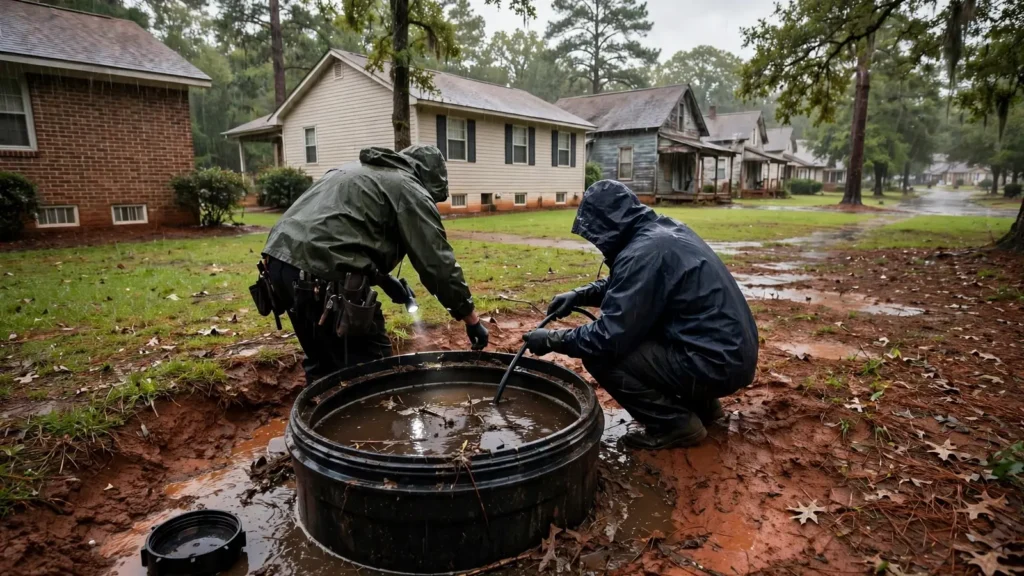
Sewage is "black water", and cleanup is different from a clean-water leak.
- Throw out anything soft and porous that sewage soaked: carpet and pad, upholstered furniture, mattresses, cardboard, paper, and food or medicine it touched.
- Usually salvageable: hard, non-porous items (metal, glass, hard plastic) after washing and disinfecting.
- Drywall and insulation that sewage wicked into are normally cut out above the water line and replaced.
- Dry it fast. Mold can start within a day or two in a Southern summer. Fans, dehumidifiers and open windows help; a crawlspace may need professional drying.
- Bigger than a bathroom floor? A water damage restoration company can clean, disinfect and dry to a standard insurers recognize. Ask your insurer before hiring one.
Will insurance pay for a sewer backup?
Often not under a standard homeowner's policy. Many policies exclude water that backs up through sewers or drains unless you've added a sewer or water backup endorsement. Flood insurance generally doesn't cover backups caused by a blocked line either. What to do:
- Read the "water backup" or "sewer backup" wording in your policy, or ask your agent directly.
- Keep the plumber's invoice, which should state the cause and where the blockage was.
- If MetroConnects finds the fault in its section of the lateral, its policy allows a reimbursement request within 30 days of the repair, and says other damage from that backup may also be reimbursable case by case.
- Renters: the landlord handles the building and its pipes; your renter's policy, if you have one, may cover your belongings.
Backups after heavy rain
Sewer lines aren't built to carry storm water. When rain gets in through cracked laterals, open cleanouts, or downspouts and sump pumps tied into the sewer, the lines can overload and back up into the lowest drains. MetroConnects asks owners to disconnect sump pumps and downspouts from the sewer and keep cleanout caps on, and its mill-village projects target exactly this kind of storm water getting into old pipe. After Helene in 2024, the county also saw uprooted trees damage buried lines; a backup that starts after a big storm is worth a camera inspection.
Making it less likely to happen again
- Find the cause. Ask for a camera inspection after any main-line backup. Our sewer line guide explains what it shows.
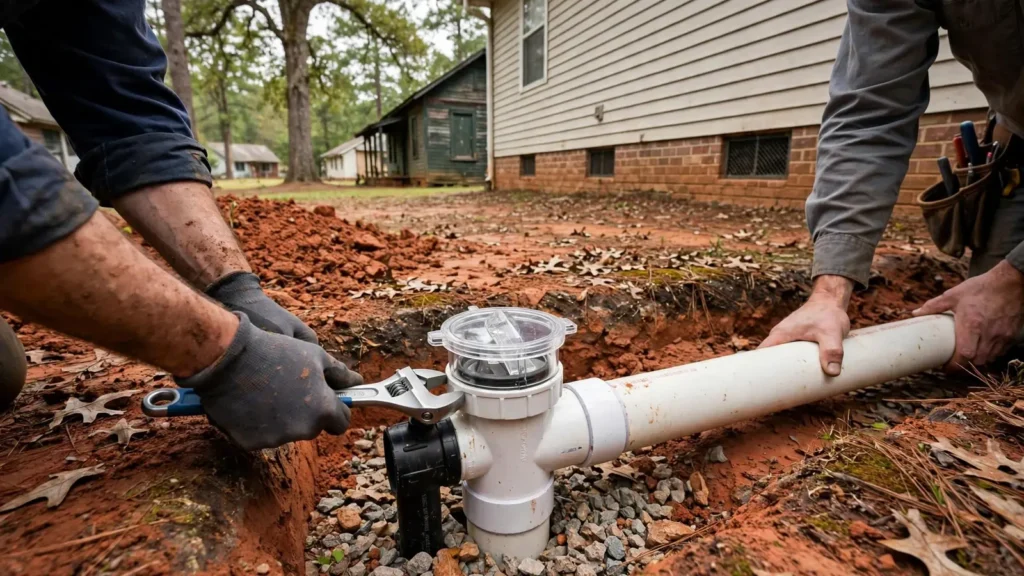
- Backwater valve: a one-way valve on the main line that stops sewage flowing back into the house. Most useful for homes with fixtures below street level. A plumber can tell you whether yours is a candidate and what permit it needs.
- Cap the cleanout and replace any broken cap.
- Keep grease and wipes out of the drains. Our drain cleaning guide covers the usual culprits.
- Add backup coverage to your homeowner's policy.
Ready to find the cause? Call a local plumber
Sewer backup questions
Is a sewer backup an emergency?
Yes, if sewage is coming into living space or water keeps rising. Stop all water use, keep people away, and call your sewer provider and then a plumber the same day. A single slow toilet with no sewage on the floor can usually wait until morning.
Is sewage water dangerous to clean up myself?
It carries bacteria and viruses, so wear boots, gloves and eye protection and keep children away. For anything larger than a small area of hard floor, a restoration company is the safer route.
Does homeowner's insurance cover sewer backup?
Not usually under a basic policy. Sewer backup coverage is typically an add-on endorsement. Check your policy wording or ask your agent before you need it.
Why does my toilet bubble when it rains?
Storm water may be getting into the sewer line, overloading it so air and water push back up. A cracked lateral, an open cleanout or a downspout tied into the sewer are common causes. A camera inspection can find it.
What is a backwater valve?
A one-way valve on your main sewer line that lets waste leave the house but closes if sewage tries to flow back in. It suits homes with drains below the level of the street sewer. It needs periodic checking and usually a permit to install.
Who pays for a sewer backup in a rental?
The landlord is generally responsible for the building's plumbing and repairs. Tenants should notify the landlord right away in writing and photograph the damage; a renter's policy may cover personal belongings.
Sources
- MetroConnects: Lateral Maintenance Policy and Reimbursement Request Form (adopted July 17, 2023); "Inspecting Lines and Capping Cleanouts" (Feb 2023); Clean Water Forward mill village projects. metroconnects.org
- Helene impacts in Greenville County: WIS and Post and Courier reporting, Sep–Oct 2024.
- General insurance guidance on sewer and water backup endorsements (Insurance Information Institute).
Page history
October 2026: first published.