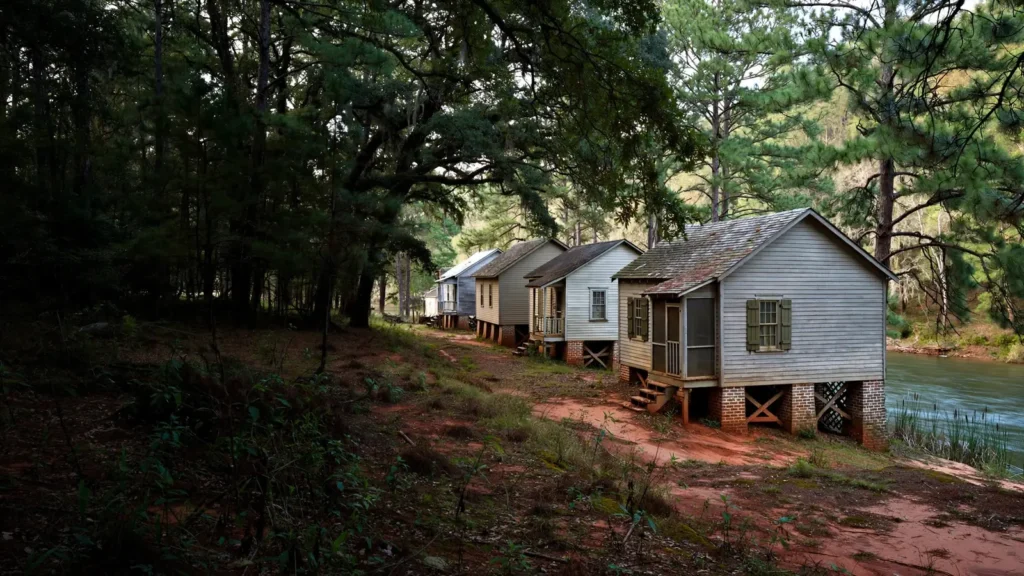
Greenville's mill villages were built fast, a little over a century ago, around the textile mills. The sewer lines under those streets were laid at the same time, and plenty of them are still in service. MetroConnects, the sewer district for most of unincorporated Greenville County, has been working through them village by village since 2024 under a program it calls Clean Water Forward.
Where the work is happening
Here's what MetroConnects has announced, in its own figures:
| Mill village | Start | Announced scope |
|---|---|---|
| Mills Mill | Summer 2024 | Rehabilitate, replace or relocate about 16,000 feet of deteriorated sewer line. The first of the mill village projects. |
| Dunean | Fall 2024 | Replace and relocate about 7,778 feet of gravity sewer and 66 manholes; rehabilitate about 635 feet more. Two phases, between Hutchins and Wallace streets and Henry Street and West Faris Road. |
| Union Bleachery | May 2025 | Phase 1: replace and relocate about 4,953 feet of sewer, install 27 manholes, and retire about 8,615 feet of clay pipe and 120 manholes dating to around 1906. Funded in part by a $4 million federal grant. |
| Judson | Announced for late 2025 | Replacement of the village's wastewater collection system. |
The aim, in MetroConnects' words, is to fix structural defects, prevent sewer overflows and cut the rainwater that leaks into old pipe and overloads the system. For residents, that should mean fewer overflowing manholes and fewer backups caused by the main itself.
Why old mains cause problems even if your pipe is fine
Old clay pipe rarely collapses all at once. It cracks, the joints separate, and roots grow in. Then two things happen. Groundwater and rainwater seep in through the cracks, and in heavy rain the extra water can fill the pipes until manholes overflow. MetroConnects calls this inflow and infiltration. The same cracks also let sewage seep out into the soil.
For a homeowner, the visible signs are a manhole lid lifting in a storm, a sewer smell on the street after rain, or a backup in the lowest drain of the house during a downpour. Our sewer backup guide covers that last one. MetroConnects also says cutting rainwater out of the system helps keep rates down, because every gallon of rain in the pipes gets pumped and treated like sewage.
What the work looks like on your street
Every project is different, so check cleanwaterforward.org or call MetroConnects about your street. On sewer jobs like these you can generally expect:
- Trenches in the road or along the right of way where a main is being replaced, and lane closures while crews are working.
- Less digging where a pipe is being lined instead of replaced. Lining (cured-in-place pipe) puts a new pipe inside the old one, working from manholes.
- Temporary pumps and hoses that carry sewage around the section being worked on, so homes stay connected.
- Notices from MetroConnects or its contractor before work affects your property or service.
- Patched pavement and restored yards at the end, sometimes weeks after the pipe work itself.
If something looks wrong during construction, such as a backup in the house or a crew working in your yard without notice, call MetroConnects at (864) 277-4442.
What it doesn't change: your lateral
A new main in the street doesn't mean a new pipe from your house. MetroConnects' Lateral Maintenance Policy, adopted in July 2023, splits the line like this:
- MetroConnects owns the main, and the service lateral up to the edge of its easement or the public right of way.
- You own the connection there and the private lateral back to the house.
- Anything within 5 feet of the house is always the owner's, whatever else applies.
Our who-owns guide walks through the exceptions. In a mill village, the private lateral is often the same age as the main that's being replaced: clay tile or cast iron, with root intrusion at the joints. Those problems don't go away when the public side is fixed.
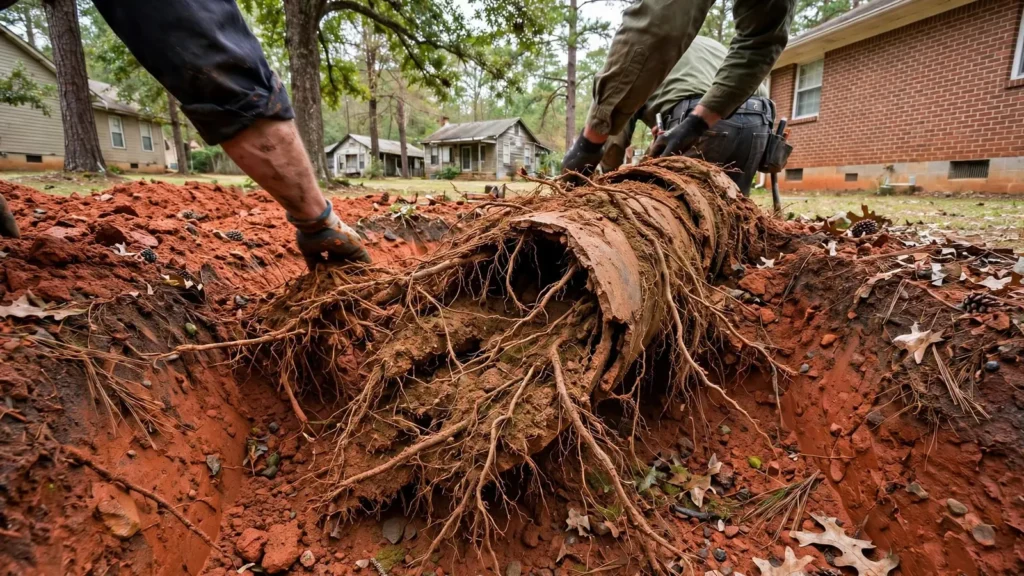
Clay, cast iron and Orangeburg: what's under a mill house
The original laterals in the mill villages were mostly clay tile, the same material as the mains MetroConnects is retiring. Inside the house, drains were usually cast iron. Over the decades many homes have been patched in different ways, so one lateral can be a mix of materials:
| Material | Where you'll find it | Common problem |
|---|---|---|
| Clay tile | Original laterals, early 1900s | Roots at the joints, cracked or offset sections |
| Cast iron | Under the house and through the foundation | Rust and scale inside, cracks along the bottom |
| Orangeburg (fiber pipe) | Repairs and replacements from about the 1950s to the 1970s | Flattens and blisters with age |
| PVC | Newer repairs and replacements | Usually sound; problems are mostly where it joins older pipe |
Our post on Orangeburg pipe explains why that one causes so much trouble.
Signs your own line needs a look
- The lowest drain in the house (a tub, shower or floor drain) backs up or gurgles when the washer drains.
- Several drains slow down at once, not just one sink.
- You've had the line snaked for roots more than once.
- Soggy patches or a sewer smell in the yard along the line's path.
- The house is original mill housing and nobody knows when the lateral was last replaced.
A camera inspection is the way to know for sure. A plumber runs a camera down the line from a cleanout and shows you the footage, joint by joint. Typical camera and repair prices are in our cost guide, and the repair options, including trenchless lining, are in our sewer line repair guide.
Slow drains or roots in the line? Call a local plumber
Why the timing helps
If MetroConnects is working on your street, two questions are worth asking the project team before crews move on:
- How will my service connection be handled when the main is replaced or relocated?
- Is there an accessible cleanout on my line? If not, ask a plumber about adding one. It makes every future inspection and cleaning cheaper.
Planning a lateral repair or replacement while the street is already open can mean less disruption to the yard. A plumber can tell you what's possible once they've seen the camera footage.
Many mill houses are rentals now. If you rent, the lateral is your landlord's responsibility, not yours, but you're the one who notices the slow tub and the gurgling toilet first. Tell the landlord in writing, mention the MetroConnects project, and keep a copy. If you own a rental in one of these villages, this is a sensible time to camera the line before a tenant's backup turns it into an emergency call on a weekend.
If the camera finds a problem
A bad lateral doesn't always mean a new pipe all the way from the house to the street. Depending on what the camera shows, the options usually include:
- Cleaning and root cutting for a pipe that's sound apart from roots. It buys time but doesn't fix the joints.
- A spot repair where one section has cracked or sagged and the rest is in fair shape.
- Lining the old pipe, which seals the joints with less digging, if the pipe is still round enough to line.
- Full replacement, usually in PVC, when the line is collapsed, badly offset or a mix of failing materials.
Lateral replacement generally needs a permit, and the plumber should pull it. Ask for the camera footage either way, so you can see what you're paying to fix. Published prices for this work are in our Greenville cost guide.
If sewage backs up into the house
If MetroConnects finds its side clear, the blockage is in your line, and that's when you call a plumber. Our sewer backup guide covers what to do in the first hour, and the older Greenville homes guide explains the other pipe problems common in mill housing.
Backup on your side of the line? Call a local plumber
Mill village sewer work: questions
How do I find out if my street is part of Clean Water Forward?
Check MetroConnects' Clean Water Forward pages at cleanwaterforward.org, or call MetroConnects. Projects are announced by mill village, and schedules can change.
Will the sewer work cut off my service?
Crews generally pump sewage around the section they're working on so homes stay connected. Short interruptions can happen when a service connection is moved; MetroConnects or its contractor should tell you beforehand.
Do homeowners pay for the new sewer mains?
The announced projects are funded by MetroConnects with state and federal grants. We haven't seen any charge to individual homeowners for the public mains. Your private lateral is a separate matter and stays your cost.
Can I hire my own plumber while MetroConnects is working on my street?
Yes, for anything on your side of the line. Tell the plumber about the project, and check with MetroConnects before any digging near its pipes or right of way.
Sources
- MetroConnects: "Dunean Mill Village Wastewater Improvement Ready to Begin" (September 2024); Union Bleachery Mill Village ribbon cutting announcement (May 5, 2025); Mills Mill project updates (2024).
- MetroConnects Lateral Maintenance Policy, adopted July 17, 2023.
- Greenville Business Magazine, Clean Water Forward at Union Bleachery Mill Village, May 2025.