Thanksgiving this year falls on Thursday, November 26. In a lot of Greenville County kitchens that means a turkey, a ham, a few pans of drippings, a stockpot of potatoes and a sink that runs nearly nonstop from noon until the last pie plate is washed. It's the one day a year many home kitchen drains get pushed past what they can handle.
Plumbing companies notice. Roto-Rooter, the national drain company, has for years promoted the day after Thanksgiving as "Brown Friday," and says it's the company's busiest day of the year, with incoming calls running about 50 percent above an average Friday. That's one company's own figure from its marketing, not an industry-wide count, but anyone who has had a sink back up with a houseful of relatives will believe it.
Why a kitchen sink gets clogged with grease at the holidays
Hot grease is a liquid. Your drain pipes aren't hot. As fat, oil and pan drippings flow through the trap and into the horizontal line inside the wall or under the house, they cool, thicken and stick to the pipe. Food scraps get caught in that sticky layer, more grease coats them, and the opening gets smaller with every meal.
ReWa, which treats most of the county's wastewater, says running hot water or adding dish soap afterward won't solve it; at best it moves the grease further down the pipe, where it sets up somewhere harder to reach. Thanksgiving adds the things that make a slow drain stop completely:
- Pan drippings and turkey fat poured into the sink "just this once."
- Gravy, butter-heavy sides and cream sauces rinsed off plates.
- Potato peels, rice, stuffing and pasta, which keep swelling in water.
- Poultry skin and stringy vegetable trimmings sent through the disposal.
- Back-to-back dishwasher loads draining through the same line.
Older homes are the most vulnerable. Galvanized steel and cast-iron kitchen lines, common in houses built before the 1970s, are rough inside and narrow with age, so grease has more to grab. Our guide to plumbing in older Greenville homes explains what those pipes look like.
How to dispose of grease in Greenville County
The right method depends on how much you have.
| How much | What to do |
|---|---|
| A greasy film on pans and plates | Wipe with a dry paper towel before washing, and trash the towel. This one habit keeps a lot of fat out of the drain. |
| Pan drippings, bacon grease, a cup or two of fat | Pour into an empty can or jar, let it harden (the freezer helps), and put it in the trash. This is ReWa's recommended method. |
| Frying oil, from a skillet up to a turkey fryer | Let it cool completely, which can take many hours for a fryer. Funnel it back into its original jug or another sealed container. Take it to a Greenville County Residential Waste and Recycling Center; the county says used cooking oil recycled there is turned into biofuel. |
| Oil you can't recycle | Cooled oil mixed into cat litter or another absorbent in a sealed bag can go in the trash. Check with your hauler if it's a large amount. |
A few details on the county option. Greenville County runs seven Residential Waste and Recycling Centers for county residents, and the county's posted hours are 7 a.m. to 6 p.m., Tuesday through Saturday. We couldn't confirm which centers take cooking oil this season or the holiday schedule, so call Greenville County Solid Waste at (864) 243-9672 before you load the car. The Friday and Saturday after Thanksgiving are a natural time to drop off fryer oil once it has cooled.
Things not to do with grease:
- Don't pour it down the sink, toilet or disposal, even with hot water running.
- Don't pour hot oil into the trash. South Carolina health officials have warned against it, and hot oil can melt right through a trash bag.
- Don't dump it in the yard or down a storm drain. Storm drains carry water straight to local creeks and rivers, like the Reedy, without treatment.
- Don't put large amounts in the compost. A little is fine for some piles; a fryer's worth turns it rancid and draws animals.
The sink backed up on Thanksgiving: what to do
It's 4 p.m., the dishwasher is halfway through, and gray water is rising in the sink. Work through this in order.
- Stop adding water. Turn off the dishwasher (it drains into the same line) and don't run the disposal. Move dirty dishes to a bin or the bathtub for later.
- Check the rest of the house. If the toilets flush fine and the bathroom sinks drain, the clog is in the kitchen line. If other drains are slow, a tub is filling or the lowest drain is backing up, it's the main line; skip to the section on main-line backups below.
- Bail out the sink into a bucket so you can see what you're doing. Standing grease water is about to go somewhere, and you want it in a bucket, not on the floor.
- Check the disposal. If it hums without spinning, it's jammed, and a jammed disposal can leave that side of the sink full. Clear it with the 1/4-inch hex key on the bottom and press the reset button. Our garbage disposal guide has the steps.
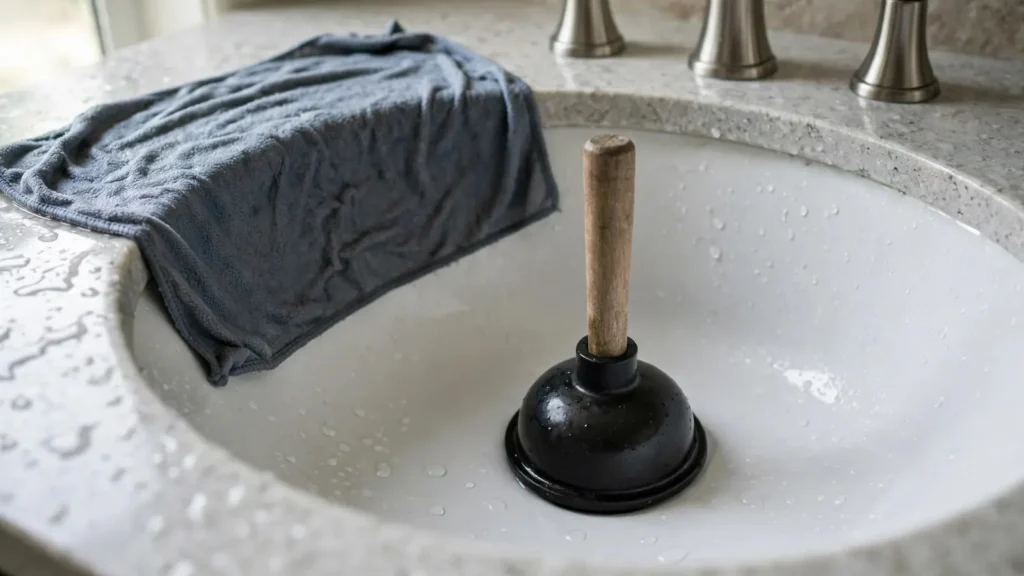
- Plunge it properly. On a double sink, seal the other drain with a stopper or a wet rag held down firmly, or the pressure just comes out the other side. Use a cup plunger with a few inches of water over it, and give it 15 to 20 firm strokes.
- Clean the trap. Put a bucket under the U-shaped pipe, loosen the slip nuts by hand, and empty it. If the trap is clear but the water still won't drain, the clog is in the line inside the wall.
- Use hot tap water, not boiling. Once it's draining, a few minutes of hot tap water can help move softened grease. Boiling water can soften PVC joints and won't fix a hard clog.
If none of that works, the grease is past the trap. That's a job for a plumber's cable or jetter, and it can usually wait for a weekday if you can live without that sink. Use the bathroom sink, paper plates and the dishwasher-free life for a day or two. If you can't wait, holiday and after-hours calls cost more; our emergency plumber guide explains when that's worth it.
Kitchen sink backed up for the holiday? Call a local plumber
Why chemical drain cleaners are a bad idea on a grease clog
The bottle promises to dissolve clogs, and on a hair clog in a bathroom sink a heavy-duty product sometimes does. On a holiday grease clog it's a poor bet, for several reasons.
- Grease clogs are often long, packed sections of pipe, not a single plug at the top. The chemical sits on the surface and never reaches most of it.
- Most heavy-duty drain cleaners rely on lye or sulfuric acid, and they generate heat. In standing water, that hot, caustic mix just sits in your sink and trap.
- Older galvanized and cast-iron lines, which plenty of Greenville County homes still have, don't take kindly to repeated doses.
- InSinkErator lists drain cleaner among the things a disposal should never receive.
- If it doesn't work, the next person to plunge or open the trap (you, or the plumber) gets splashed with caustic water. Always tell the plumber if you've used one.
Enzyme or bacterial drain products are gentler and can help keep a line clean over weeks, but they won't open a stopped sink on Thanksgiving afternoon.
What a plumber does for a grease clog
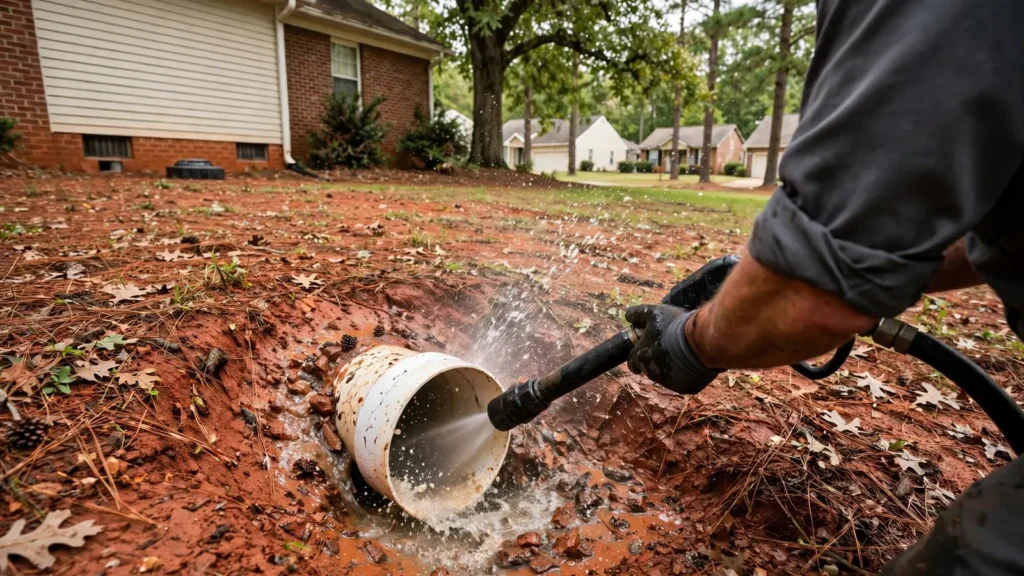
Most kitchen clogs are cleared with a drain cable run from the sink, through the trap arm and into the line. That opens a channel. Hardened grease often stays stuck to the pipe walls, though, so a kitchen line that has clogged more than once may be better served by hydro jetting, which scours the whole pipe. A plumber should check the pipe's condition first on very old lines.
Ask what they found. If the cable came back coated in white or gray waxy grease, it's the cooking habits. If it came back with roots or hit a solid stop far out, the problem may be the main line, and a camera inspection is the next step. For published price ranges on drain clearing and jetting, see our Greenville plumber cost guide and our drain cleaning guide.
A cooking-day checklist for your kitchen drain
- Set an empty can or jar by the stove before you start cooking, for drippings and fat.
- Keep a roll of paper towels next to the sink for wiping pans before they hit the water.
- Scrape plates into the trash, not the disposal. Use the disposal only for small rinse-off bits, with cold water running.
- Keep potato peels, poultry skin, celery and onion trimmings out of the disposal.
- Run the dishwasher when the sink isn't also draining, not at the same time.
- Put a sink strainer in the drain that isn't the disposal.
- If the sink starts draining slowly on Wednesday, deal with it Wednesday. A slow kitchen drain the day before Thanksgiving almost never clears itself by Thursday.
And if you hear the kitchen sink or a nearby toilet gurgling as the dishwasher drains, that's an early warning that the line is narrowing. Our guide to gurgling drains explains what it means.
Slow kitchen drain before the holiday? Call a local plumber
Holiday grease clog questions
Can I pour bacon grease down the drain if I run hot water after it?
No. The hot water only carries the grease a little further before it cools and sticks, often into the line in the wall or the sewer lateral in the yard, which is harder and more expensive to clear.
Where can I recycle turkey fryer oil in Greenville County?
Greenville County says used cooking oil can be recycled at its Residential Waste and Recycling Centers. Let the oil cool completely, seal it in a jug, and call County Solid Waste at (864) 243-9672 to confirm which center takes it and the holiday hours.
Should I run the disposal after a big holiday dinner?
Sparingly. Scrape the bulk of the food into the trash and use the disposal for small rinse-off scraps, with a strong flow of cold water, one batch at a time.
Can a grease clog cause a sewer backup?
Yes. Grease that gets past the kitchen line can build up in the main line or the lateral to the street, and MetroConnects lists grease as a cause of many sewer blockages and overflows.
Can I still run the dishwasher if the kitchen sink is clogged?
No. On most kitchens the dishwasher drains into the same line, often through the disposal, so it will push dirty water up into the sink or leave it standing in the dishwasher. Wait until the sink drains freely.
Sources
- ReWa (Renewable Water Resources), "Protecting Pipes": FOG guidance and home grease disposal steps.
- Greenville County Solid Waste: used cooking oil recycling at Residential Waste and Recycling Centers; Residential Waste and Recycling Centers (seven centers, posted hours, (864) 243-9672). Checked October 2026.
- MetroConnects, "How to Protect Your Sewer System" (grease and sewer blockages); Lateral Maintenance Policy (adopted July 17, 2023).
- Roto-Rooter, "Brown Friday" news releases and coverage (company-reported busiest day, calls about 50 percent above an average Friday), 2022 and 2024.
- SC DHEC news release, "Don't waste Thanksgiving this year" (holiday cooking oil and waste tips).
- InSinkErator foodservice disposer guidance (items a disposer should never receive, including drain cleaner).