Drains are supposed to be quiet. Water goes down, air comes in behind it through the vent pipes on the roof, and nothing makes a sound worth noticing. Gurgling drains are the plumbing system telling you that balance is off somewhere. Sometimes it's a wad of hair two inches below the sink stopper. Sometimes it's a root mass forty feet out in the yard.
The trick is reading which fixture gurgles, and when. That tells you more than any drain product will. Below is how we'd work through it in a typical Greenville County house, from a slab ranch in Mauldin to a 1950s crawlspace home near the city, before anyone pulls out a cable.
Why drains gurgle in the first place
Every drain has a trap holding a few inches of water, and every drain system has vents that let air in. When water rushes down a pipe, it needs air to follow it. If the pipe is partly blocked, or the vent can't supply air, the moving water pulls air from the easiest place it can find: usually through the water in a nearby trap. That bubbling through the trap is the gurgle you hear.
Three things cause it, and they sound alike:
- A partial clog in the fixture's own drain, so water and air fight their way through the same narrow gap.
- A blocked or failed vent, so the system goes looking for air through the traps.
- A blockage in the main line, so water from one fixture backs up and pushes air out through another.
Which fixture gurgles, and when: what it points to
| What you hear | Most likely cause | First move |
|---|---|---|
| Bathroom sink gurgles as it drains, drains slowly, nothing else affected | Hair and soap in that sink's trap or tailpiece | Pull the stopper, clean it, plunge with the overflow covered |
| Tub gurgles and drains slowly | Hair at the tub drain or in its trap | Pull the stopper and clear hair with a plastic drain tool |
| Kitchen sink gurgles when the dishwasher pumps out | Grease and food in the kitchen drain line | Clean the disposal and trap; the line may need cabling |
| Tub or shower gurgles when the toilet flushes in the same bathroom | Partial blockage in the shared bathroom branch, or the main | Check whether other bathrooms do it too |
| Toilet gurgles while the washing machine drains | Blockage downstream of where the laundry and toilet lines meet, often the main | See the washer section below |
| Toilet gurgles or the bowl water moves when nobody is using anything | Wind over the roof vent, a blocked vent, or a main line under strain | Note if it happens on windy days; check bowl water level |
| Several drains gurgle, and water rises in a tub or shower | Main line blockage | Stop running water and call (MetroConnects first if sewage is backing up) |
The pattern to remember: the fixture that gurgles is often not the one with the problem. It's the one where air finds its way out.
Why the toilet gurgles when the washer drains
A washing machine doesn't drain like a sink. Its pump dumps a large volume of water into the standpipe in a short burst, several times a cycle. In most houses the laundry drain joins the toilet's drain line somewhere on its way to the main sewer line.
When the line past that junction is partly blocked, the washer's water can't get away fast enough. It backs up in the pipe and shoves air ahead of it, and the nearest escape is the toilet trap. You hear a gurgle, maybe see the bowl water bounce or drop. If the blockage is worse, water climbs up into the lowest tub or shower.
What usually causes it:
- Lint. Washers shed lint and fabric fibers, and they build up with soap scum in the laundry line. A mesh lint trap on the end of the washer hose catches a lot of it.
- A main line that's narrowing from roots, grease, wipes or a sag where the pipe has settled. The washer is just the first fixture to put enough water into it at once to show the problem.
- A laundry standpipe without a proper vent, especially where a laundry room was added or moved during a remodel.
Test it: run the washer through a drain cycle while someone watches the toilet and the lowest shower. If the toilet gurgles but nothing rises, you have early warning. If water comes up in the shower, the main is in trouble. Hold off on more laundry until it's cleared.
Partial clog, vent blockage or main line? A decision guide
| Clue | Partial clog nearby | Vent problem | Main line |
|---|---|---|---|
| How many fixtures? | One | One or several, often in one area | Several, worst at the lowest drain |
| Slow drain? | Yes, that fixture | Sometimes, without a clog to find | Yes, several |
| Sewer smell? | Rarely | Often (traps get sucked dry) | Sometimes |
| Toilet bowl water level | Normal | Low after other fixtures drain | May rise, then fall slowly |
| Yard cleanout | Dry | Dry | Wastewater standing in it if the clog is past the cleanout |
| Plunging helps? | Usually | No | Briefly at best |
Vent problems are the sneaky ones. If a plumber cables a gurgling drain and finds nothing, or the toilet bowl water keeps dropping after the tub drains, the vent is the next suspect. Roof vents get blocked by leaves, pine straw and nests. Many newer homes, and plenty of kitchen islands, use an air admittance valve under the sink instead of a pipe to the roof. That small one-way valve wears out, and when it sticks closed the sink gurgles and drains slowly as if it were clogged. Replacing one is a quick, inexpensive fix.
Drains gurgling all over the house? Call a local plumber
What you can safely check yourself
- Write down the pattern. Which fixture gurgles, what was draining at the time, and whether it's worse on windy or rainy days. This saves real time on a service call.
- Do the fill-and-release test. Fill a bathroom sink and the tub, pull both plugs at once, and listen to the toilet and other drains. Then flush each toilet while watching the tub.
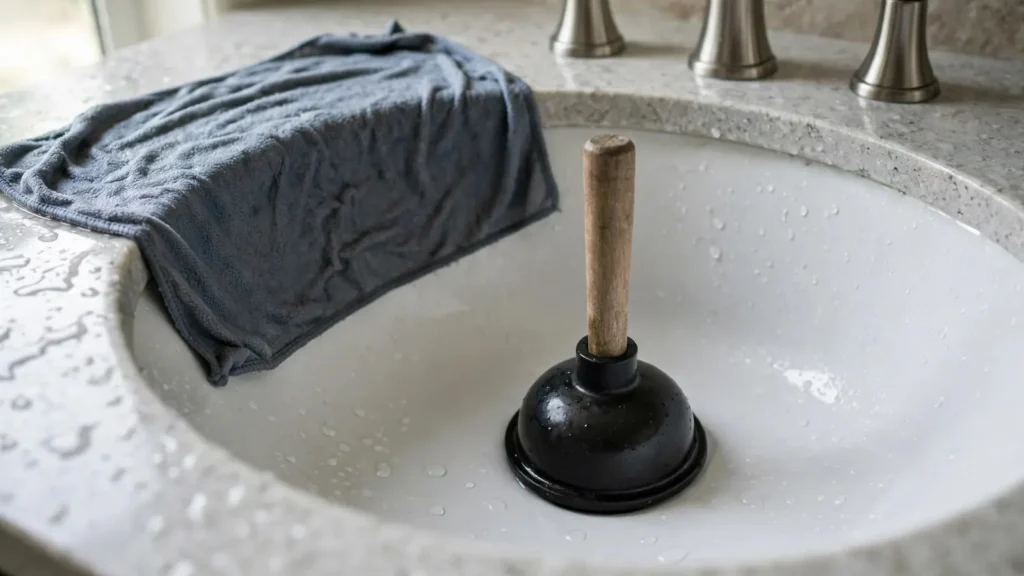
- Plunge the single fixture. For a sink or tub, block the overflow hole with a wet rag first so the pressure goes down the drain. Use a flange plunger on a toilet.
- Clean the trap and stopper. Hair mats on bathroom stoppers cause most single-sink gurgles. Our drain cleaning guide shows how.
- Look under the kitchen sink for an air admittance valve (a small gray or white cap on a short pipe above the drain). If the sink gurgles and you can't find a clog, that's worth replacing.
- Check the yard cleanout. Unscrew the cap slowly. Wastewater standing in it means the blockage is between there and the street; dry means it's between there and the house.
- Skip the chemicals. Liquid drain openers don't clear a vent or a main line, and they sit in the pipe waiting for whoever opens it next.
Don't climb on the roof to snake a vent, especially a steep or wet one. A plumber can clear it from the roof with the right equipment, or diagnose it from inside first.
When to camera the line
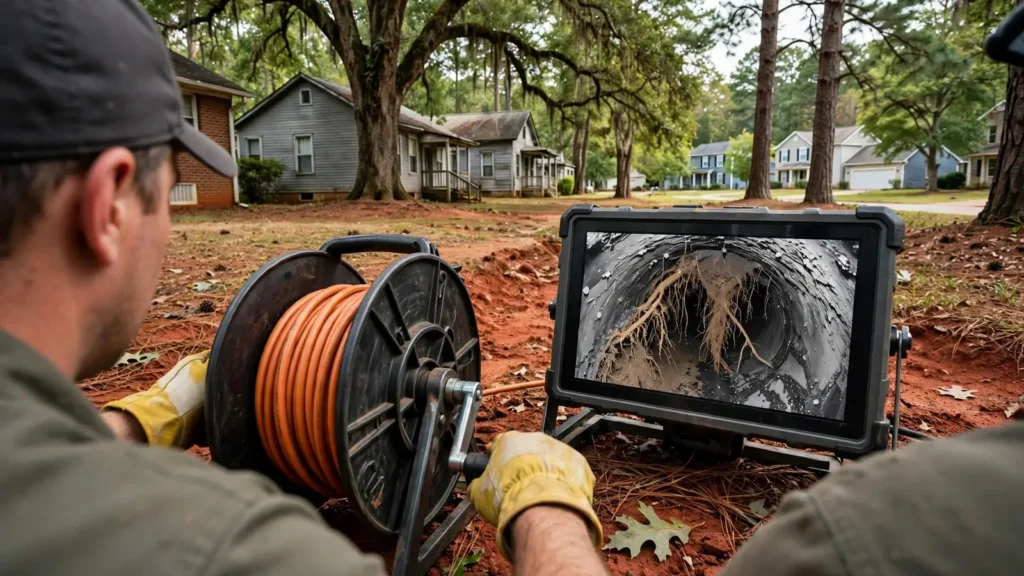
For one gurgling sink, a camera is overkill. For the main line, it's often the best money you'll spend, because it turns a guess into a picture. Ask for a camera inspection when:
- Several fixtures gurgle, or the toilet gurgles with the washer, and it keeps coming back after a cleaning.
- The house was built before the 1980s and still has its original clay, cast-iron or Orangeburg sewer line. Older Greenville neighborhoods have a lot of all three.
- There are big trees between the house and the street. Roots are the most common cause of repeat main-line trouble in older lines; our post on tree roots in the sewer line covers what to do about them.
- You're buying the house. Gurgling during a showing is a free warning.
- You're in a MetroConnects area and need to know whether the problem is in your part of the lateral or theirs. Footage with distances from the cleanout is the clearest evidence.
The camera goes in through the cleanout and records the run to the street. Ask for the video and the distance to each problem. For local prices on a camera inspection and drain cleaning, see our plumber cost guide. If the footage shows a broken or root-filled lateral, our sewer line repair guide walks through the options.
Greenville County specifics
Where you live changes who you call when gurgling turns into a backup. If sewage is coming up and you're a MetroConnects customer (most of unincorporated Greenville County, including Taylors, Berea, Wade Hampton and Five Forks, plus Travelers Rest and Piedmont), call MetroConnects first at (864) 277-4442. Its lateral policy asks owners to call it before a plumber, so it can check its part of the line. Inside the City of Greenville, Mauldin, Simpsonville, Fountain Inn or Greer, call your city or Greer CPW about the main, then a plumber for your side. Our guide to who owns the sewer line shows where the split is.
On septic, gurgling in every drain can mean the tank is full or the drainfield is saturated, especially after a long wet stretch. A septic company checks the tank; a plumber handles the house plumbing.
Gurgling often travels with a sewer smell, because the same air movement that makes noise can pull a trap dry. If you're smelling it too, our guide to a sewer smell in the house covers tracing it.
Can it wait?
A single gurgling sink can wait for a weekend project. A toilet that gurgles with the washer is an early warning: it can wait days, not months, and you should go easy on laundry until it's checked. Gurgling with water rising in a tub, shower or floor drain can't wait. Stop using water in the house and get the main line looked at, because the next step is sewage on the floor. Our sewer backup guide covers what to do if it gets there.
Toilet gurgling when the washer drains? Call a local plumber
Gurgling drain questions
Is a gurgling drain an emergency?
Usually not by itself. It becomes urgent when several drains gurgle and water rises in a tub, shower or floor drain, because that means the main line is close to backing up.
Will baking soda and vinegar stop a drain from gurgling?
It can loosen a little soap film near the top of a drain, but it won't clear a hair mat, a grease clog, a blocked vent or roots in the main. If the gurgle comes back after a day, the cause is further down.
Why does my toilet gurgle when nobody is using any water?
Wind blowing across the roof vent can pull air through the toilet trap. So can a neighbor's heavy water use on a strained shared line, or a vent that's partly blocked. If it happens on calm days, or the bowl water keeps dropping, have the vent and main checked.
Does a gurgling sink mean the vent is clogged?
Not always. A partial clog in the sink's own drain is more common. Suspect the vent when there's no clog to find, the sink also smells, or nearby traps lose water after other fixtures drain.
What happens if I ignore a gurgling drain?
A partial clog tends to keep catching debris until it closes up. A vent problem can keep pulling traps dry and let sewer gas in. A main line problem usually ends with a backup at the lowest drain in the house.
Sources
- International Plumbing Code, chapters on traps and vents (trap seal depth, venting, air admittance valves); South Carolina Building Codes Council, 2021 code adoptions effective January 1, 2023.
- MetroConnects Lateral Maintenance Policy (adopted July 17, 2023), sewer emergency contact (864) 277-4442.
- Ferguson, "Air admittance valves vs venting" (how AAVs work and fail).