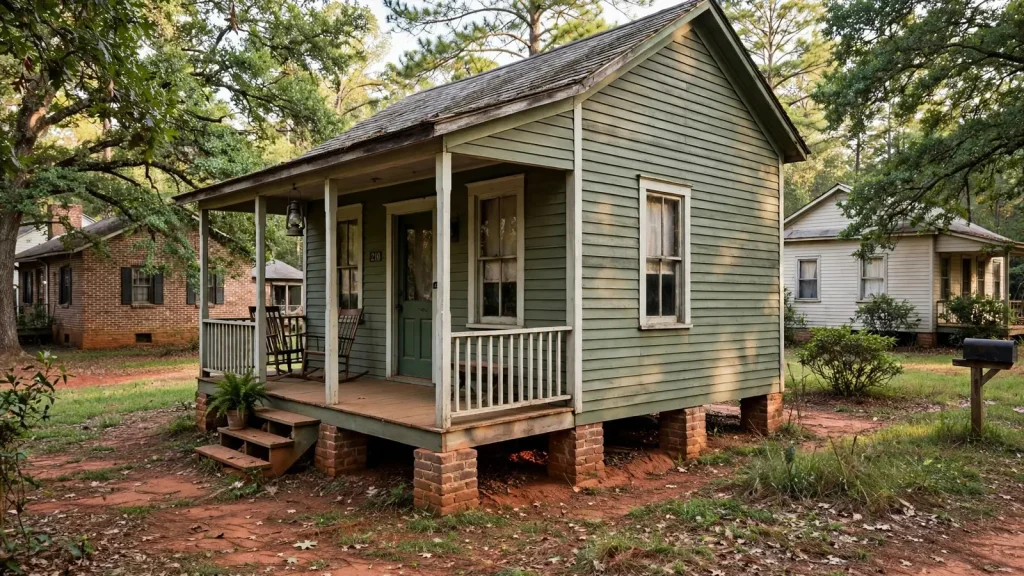
Renting in Greenville County means a lot of older housing: mill village cottages, 1950s brick ranches, and duplexes that have been patched for decades. When something breaks, the question isn't only "who can fix this" but "who has to pay for it, and how fast." South Carolina law answers more of that than most renters realize.
We read the Act itself on the South Carolina Legislature's site and pulled out the sections that matter for plumbing. One plain disclaimer, said once: this is general information from a plumbing guide, not legal advice. For a dispute, talk to a lawyer or a legal aid office.
What South Carolina law says landlords must do
Section 27-40-440 lists the landlord's maintenance duties. The plumbing-related ones say the landlord must:
- comply with building and housing codes that materially affect health and safety;
- make all repairs and do whatever is reasonably necessary to keep the place "fit and habitable";
- make available running water and reasonable amounts of hot water at all times, plus reasonable heat;
- keep the electrical, gas, plumbing and heating equipment the landlord supplies in reasonably good and safe working order.
The Act also defines "essential services" in Section 27-40-210. The list includes sanitary plumbing or sewer service, running water, hot water, electricity, and gas used for heat, hot water or cooking. There's an exception when the tenant controls the heat or hot water through their own direct utility connection, which matters for a tenant who pays the gas bill for the water heater.
The single-family house exception
If you rent a single-family house, read your lease closely. Section 27-40-440(c) lets a landlord and tenant agree in writing that the tenant will handle certain repairs and maintenance, as long as the agreement is made in good faith and not to dodge the landlord's obligations. In other kinds of rentals the rules for shifting work to the tenant are tighter. A lease line that says "tenant responsible for all plumbing" in a single-family rental may hold up; the same line in an apartment complex is far weaker.
What tenants have to do, and who pays for clogs
Section 27-40-510 sets the tenant's side. Tenants must keep the unit reasonably clean and safe, keep plumbing fixtures reasonably clean, use the plumbing and appliances reasonably, and not deliberately or negligently damage the place or let guests do it.
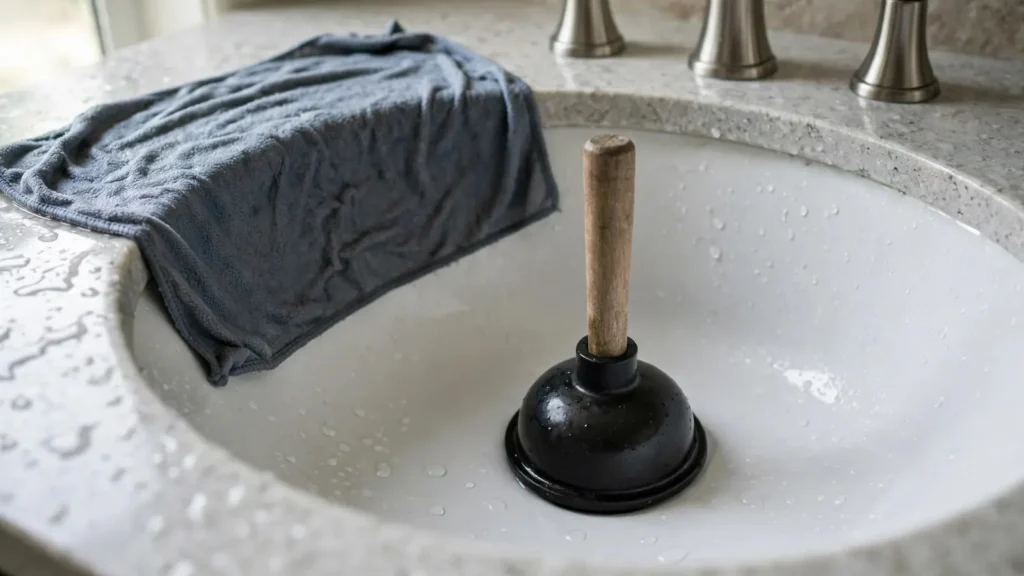
That's where most fights over clogs land. If a plumber pulls a wad of wipes, grease or a toddler's toy out of the line, that's the tenant's cost in almost every lease. If the plumber finds tree roots, a collapsed clay pipe or a sagging cast-iron line, that's a building problem, and the landlord's. Section 27-40-720 lets a landlord give written notice when a tenant's failure to maintain the unit affects health and safety; if the tenant doesn't fix it within 14 days (or promptly in an emergency), the landlord can have the work done and bill the tenant for it.
| Problem | Common cause | Who usually pays |
|---|---|---|
| Toilet clog, one fixture | Wipes, paper towels, objects | Tenant, if the plumber finds tenant-caused debris |
| Kitchen sink clog | Grease, food scraps | Often tenant; depends on the lease and what's found |
| Main line backup, several drains | Roots, broken or bellied pipe, old Orangeburg or clay | Landlord |
| Leaking supply line or valve | Age, wear | Landlord |
| Water heater failure | Age, sediment, a failed element | Landlord, unless the lease validly shifts it (single-family) or the tenant damaged it |
| Frozen and burst pipe | Cold snap, poor insulation, or the heat shut off | Usually landlord; can shift if a tenant left the heat off or ignored freeze warnings in the lease |
For more on how main-line clogs differ from a single drain, see our drain cleaning guide. If sewage is coming up into a tub or floor drain, start with our sewer backup steps.
What to do in a plumbing emergency as a renter
Water damage doesn't wait for the landlord to call back. Do these in order:
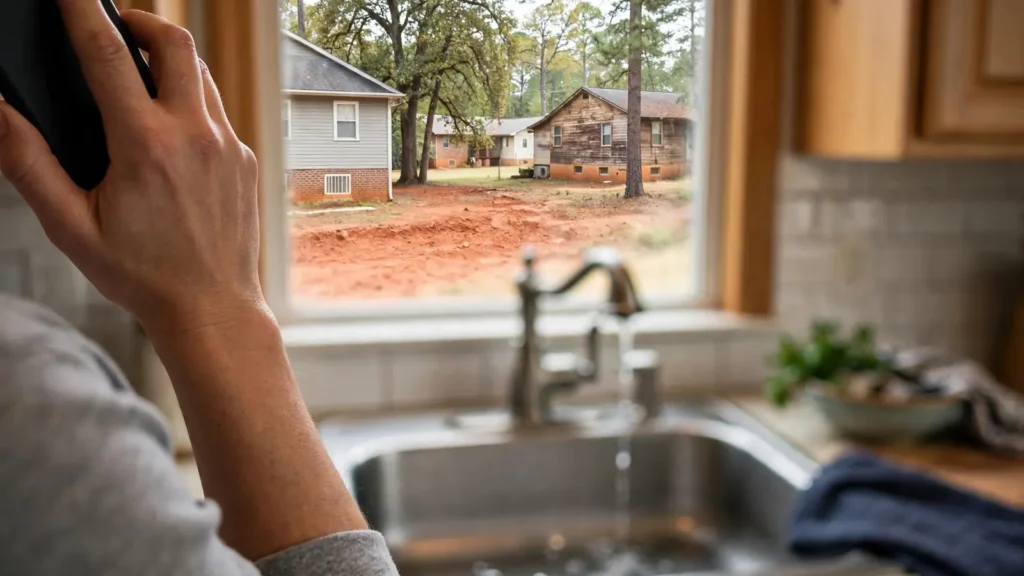
- Stop the water. Close the valve under the fixture, or the main shut-off for the unit. Find it on move-in day, not during the flood. In apartments it may be in a closet, behind an access panel or at a shared meter.
- Make the water heater safe if water is around it: breaker off for electric, the control knob to "Off" or "Pilot" for gas.
- Call the landlord or manager's emergency line, then send a text or email right away with photos and the time. The text is your written record.
- Protect your things and start drying what you can. Move electronics and rugs, and put towels down.
- If you smell gas, leave first and call 911 from outside. That's not a landlord call.
The Act lets a landlord enter without the usual 24 hours' notice in an emergency (Section 27-40-530), so don't be surprised if maintenance shows up quickly. For a burst pipe, our burst pipe guide walks through the first hour, and our emergency plumber page helps sort what truly can't wait until morning.
Landlord said go ahead? Call a local plumber
How to give your landlord notice that counts
Almost every tenant remedy in the Act starts with written notice. A phone call is fine for speed, but follow it with something in writing. The landlord has to give you, in writing, the name and address of the owner or an authorized agent by the start of the tenancy (Section 27-40-420), so that's where formal notice goes. Text and email are useful records; for anything serious, a letter sent certified mail is hard to argue with.
A notice doesn't need legal language. Something like this works:
"On [date], the kitchen sink drain at [address] began backing up into both sides of the sink. It's still not draining. I reported it by phone on [date]. Please repair it. I'm sending this notice under the South Carolina Residential Landlord and Tenant Act. [Name, unit, phone.]"
Keep a copy, plus photos and short videos, with dates. If the plumber says what caused the problem, ask for it on the invoice.
Landlord plumbing repairs in SC: what happens if they don't get done
| Remedy | Section | How it works | The catch |
|---|---|---|---|
| End the lease | 27-40-610 | After written notice of a material breach, the lease can end on a date at least 14 days after the landlord receives it, unless the landlord fixes the problem first | Not available for problems you or your guests caused |
| Actual damages | 27-40-610(b) | A tenant can sue for actual damages and ask a court to order repairs; attorney's fees if the noncompliance was willful | You have to prove it, so documentation matters |
| Essential services (water, hot water, sewer) | 27-40-630 | After notice and a reasonable time, the tenant may obtain reasonable amounts of the service and deduct the actual, reasonable cost from rent, or sue for the reduced rental value | Doesn't authorize making repairs yourself and deducting them |
| Defense in an eviction | 27-40-640 | A tenant can raise the landlord's failures as a defense or counterclaim | Generally waived if the landlord didn't get notice in time to fix it |
| Willful shutoff of water or other essential services | 27-40-660 | A tenant can recover the greater of three months' rent or twice actual damages, plus attorney's fees | Applies to willful interruption by the landlord, not a broken pipe |
| Protection from retaliation | 27-40-910 | A landlord can't raise rent, cut services or file for possession because you complained to code enforcement or to the landlord | Exceptions apply, for example if you caused the violation |
A word of plain caution: simply stopping rent because the plumbing is broken is risky in South Carolina. The Act's remedies have specific steps, and skipping them can hand the landlord an eviction case.
What this looks like in a Greenville rental
Older rentals here tend to have the same handful of problems. Mill houses and pre-1970 homes may still have galvanized supply pipe that clogs with rust and leaks at the threads, and cast-iron or clay drains that crack or fill with roots. Many sit on brick piers or open crawlspaces, so pipes freeze in a hard January. A lease may ask you to keep the heat on and drip faucets in a freeze; our frozen pipes guide covers what actually helps. Our page on plumbing in older Greenville homes explains what's behind the walls.
Some problems belong to neither of you. A leak at the meter or in the street is usually the water utility's, and a backup in the public sewer main is the sewer provider's. Our guide to who owns the water and sewer line shows where the line falls.
If the water account is in your name, you may also get mail from Greenville Water about things like backflow testing for an irrigation system. Greenville Water's cross-connection manual puts that duty on the customer of record even when they don't own the plumbing, so pass any such letter to your landlord in writing right away. Our post on backflow testing in Greenville explains those letters.
A simple record that protects your deposit
- Photos of every fixture, under-sink cabinet and the water heater on move-in day.
- Every repair request in writing, with the date.
- Photos or video of each problem as it happens, and after it's fixed.
- The plumber's invoice or a photo of it, especially the line describing the cause.
- A forwarding address given to the landlord in writing when you move out. Under Section 27-40-410, deposit deductions have to be itemized in writing within 30 days, and a landlord who wrongfully withholds can owe three times the amount.
Renter's insurance isn't part of the Act, but it's the usual way to cover your own belongings in a leak. The landlord's policy generally covers the building, not your couch.
Need a plumber for your rental? Call a local plumber
Renter plumbing questions
Can my landlord charge me for a clogged toilet?
Often, yes, if the plumber finds the clog was caused by something the tenant put down it. Clogs from roots, broken pipe or an old drain are a building problem and usually the landlord's. Ask the plumber to write the cause on the invoice.
How long does a landlord have to fix a leak in SC?
For a material problem, the Act's termination remedy gives the landlord until a date at least 14 days after receiving written notice. For essential services like water and hot water, the standard is a reasonable time after notice, which for no water at all is short.
Can I withhold rent if my landlord won't fix the plumbing?
Not simply by stopping payment. The Act has specific remedies with notice steps, including deducting the reasonable cost of obtaining essential services. Skipping those steps can lead to an eviction filing. Talk to a lawyer or legal aid first.
Does my landlord have to fix the water heater in SC?
Generally yes. Section 27-40-440 requires reasonable amounts of hot water at all times and safe plumbing and gas equipment. A single-family lease can validly shift some repairs to the tenant in writing, so check yours.
Can my landlord come in to fix a leak without notice?
In an emergency, yes. Otherwise the Act generally requires at least 24 hours' notice, with entry at reasonable times, unless you asked for the repair and the visit falls within the hours the Act allows.
Sources
- South Carolina Code of Laws, Title 27, Chapter 40 (Residential Landlord and Tenant Act), Sections 27-40-210, 27-40-410, 27-40-420, 27-40-440, 27-40-510, 27-40-530, 27-40-610, 27-40-630, 27-40-640, 27-40-660, 27-40-720 and 27-40-910, South Carolina Legislature website, accessed October 2026.
- Greenville Water, Cross Connection Control Manual, adopted September 6, 2022 (customer responsibility section).