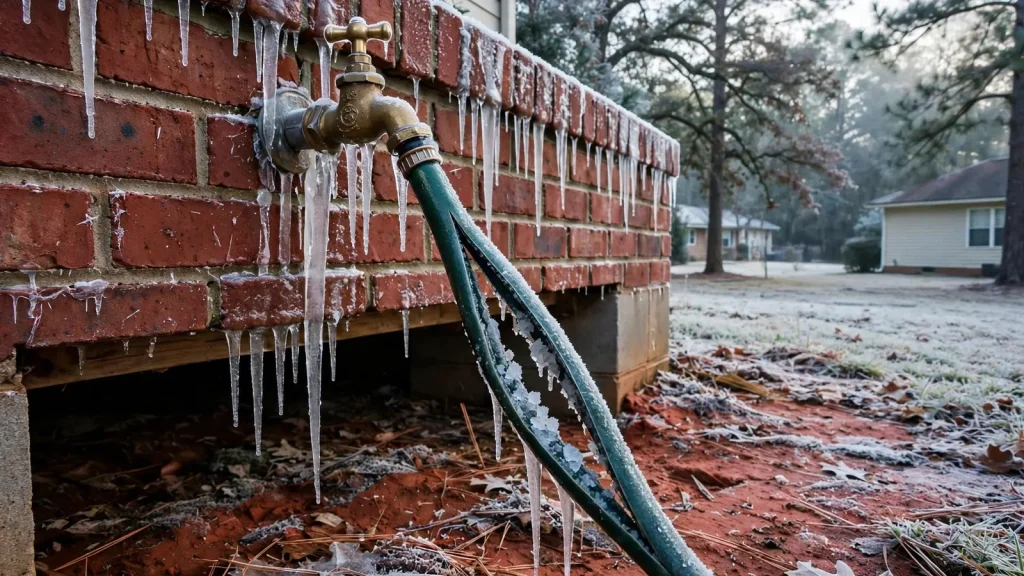
Winter freeze damage in Greenville County is sneaky. A pipe that split in January can stay quiet for months, because the break sits behind a valve that's been closed since fall. Then the first warm Saturday in April, you hook up the hose, open the spigot, and water starts running down the inside of the wall or into the crawlspace.
That's why this spring plumbing checklist is built around testing things while you can watch for the leak, instead of finding it after the drywall is soaked. Most of it takes an afternoon and no tools beyond a flashlight, a screwdriver and a helper.
When to start: the Upstate's last freeze date
Clemson's Home and Garden Information Center gives April 15 as the average last frost date for the SC Piedmont, which includes Greenville County. An average means plenty of years freeze later. The National Weather Service's freeze records for Greenville-Spartanburg, going back to 1874, show last freezes as late as May 10 (in 1906 and again in 1989), May 8 (1885 and 1992) and May 4 (1986). In the mildest years the last freeze came in February.
So here's a practical rule. Do the indoor and crawlspace checks in March, when it's comfortable to crawl around. Hold off on fully charging the irrigation system and putting away the faucet covers until mid-April, and keep the covers somewhere you can grab them if a late cold snap shows up in the forecast. Nights in the high 20s rarely hurt a house; a sprinkler backflow device sitting full of water is a different story.
The spring plumbing checklist at a glance
| Check | When | What you're looking for | Usually a DIY job? |
|---|---|---|---|
| Outdoor faucets | Mid-April | Water inside the wall, crawlspace or basement when the faucet runs | Testing yes, replacing usually no |
| Irrigation startup | Mid to late April | Cracked backflow device, leaking valves, broken heads | Startup yes; repairs and backflow tests no |
| Crawlspace or basement | March | Drips, wet or fallen insulation, puddles on the vapor barrier | Looking yes |
| Water heater | Any time | Water in the pan, a dripping relief valve, rust at the base | Looking yes |
| Sump pump | Before storm season | Pump runs, float moves freely, discharge flows away from the house | Yes |
| Gutters and downspouts | After pollen season | Clogs, overflow at corners, downspouts dumping at the foundation | Yes, if ladders don't scare you |
| Leak check at the meter | Any time | Leak indicator spinning with every fixture off | Yes |
Outdoor faucets: the leak that waits until spring
Most newer Upstate homes have frost-free sillcocks. The valve that actually stops the water sits several inches to a foot or more inside the wall, where it's warm, and a long tube carries water out to the spout. When you shut it off, the tube is supposed to drain. Leave a hose attached, though, and the water can't drain out. It freezes in the tube, the tube splits, and nothing happens until you turn the faucet on again. Woodford, one of the big makers of these faucets, says it plainly in its troubleshooting guide: water won't leak from burst tubing until the faucet is turned on, and a lot of time can pass between the break and its discovery. A faucet that leaks inside the wall when it runs needs replacing.
Here's the test:
- Put a helper inside at the wall behind the faucet, or in the crawlspace or basement below it, with a flashlight.
- Open the faucet fully with nothing attached and let it run for a minute.
- Now attach a hose with a closed nozzle and open the faucet again. This pressurizes the tube, which shows small splits that leak only under pressure.
- Look for water on the inside wall, the sill plate, the crawlspace dirt or the basement ceiling. Outside, watch for water seeping out around the faucet flange or at the foundation below it.
- Shut it off right away if you see any, and don't use that faucet until it's fixed.
Older houses, especially brick ranches from the 1960s and 70s, often have plain hose bibs with the valve right at the outside wall. Those freeze differently: the spout or the pipe just inside the wall bursts and usually leaks as soon as the weather warms. If a split pipe is spraying, shut off the main and read our burst pipe guide. When replacing a frost-free faucet, ask about models with a built-in pressure relief that protects the tube if someone forgets the hose next winter.
Irrigation startup and the backflow device
If you have an in-ground sprinkler system, the backflow device is the part most likely to have frozen. Above-ground pressure vacuum breakers sit out by the foundation, and their bonnets and bodies crack on hard nights. You won't know until you turn the water on.
- Look the device over first. Check for cracks in the body or bonnet, and make sure the test cocks are closed (they're often left open after winterizing).
- Turn the device's ball valves fully open if they were left at a half-open angle for winter.
- Open the main irrigation supply slowly. Opening it fast can slam a weak part. Listen and watch for spraying at the device.
- Run each zone for a few minutes and walk it. Look for broken heads, geysers and soggy spots that suggest a broken pipe.
- Check the rain sensor and controller. Greenville Water requires both on new systems served by its irrigation meters.
Spring is also when a lot of Greenville Water backflow test letters land. Not every house needs a yearly test. It depends on the device you have, and many newer residential irrigation meters have a non-testable dual check. Our post on backflow testing in Greenville explains the rules, the 45-day notice and the $500 late fee.
Faucet leaking inside the wall? Call a local plumber
Crawlspace and basement: look before the leak shows up upstairs
A lot of Greenville County houses sit on crawlspaces, and that's where winter does its quiet damage. Pick a dry March afternoon and take a good flashlight.
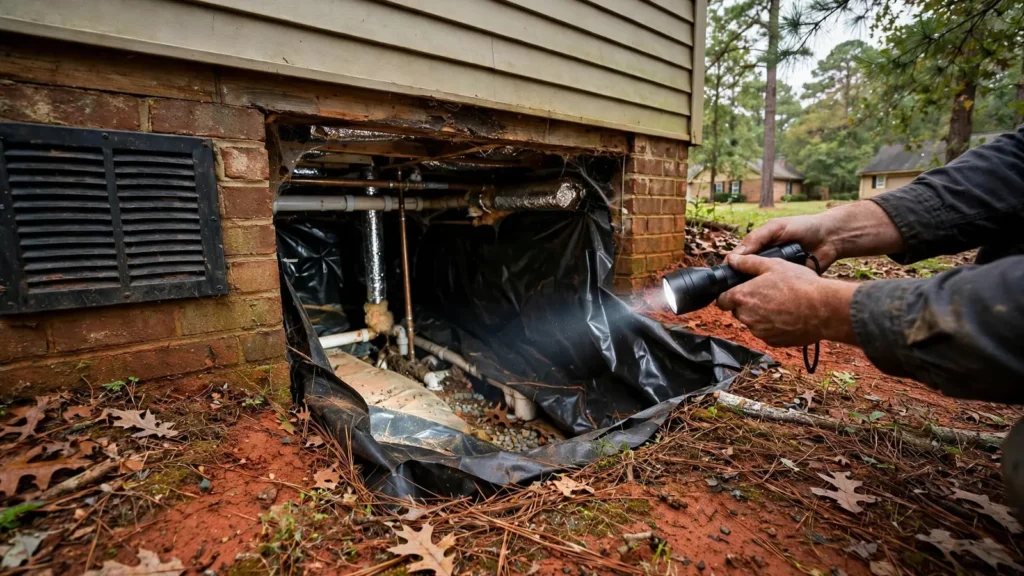
- Pipe insulation sleeves that fell off or got pulled down by animals. Put them back now while you remember where the cold spots were.
- Drips at fittings, especially on the lines that run along outside walls and to the outdoor faucets.
- Wet, sagging fiberglass insulation between the joists. It often means a slow leak above it, from a toilet seal, a shower valve or a supply line.
- Puddles on top of the plastic vapor barrier. Water on top of the plastic came from above (a pipe or the house). Water under it is usually groundwater or drainage.
- Any heat tape you used over the winter. Check it for scorched spots or damaged insulation, and unplug it for the season if the maker says to.
- A sewage smell or wet soil near the main drain line, which points to a cracked drain, not a supply leak.
Houses built before the 1970s may still have galvanized supply pipe, and old pipe tends to fail at threaded joints after a hard winter. Our guide to plumbing in older Greenville homes explains what to look for.
Water heater: a five-minute look
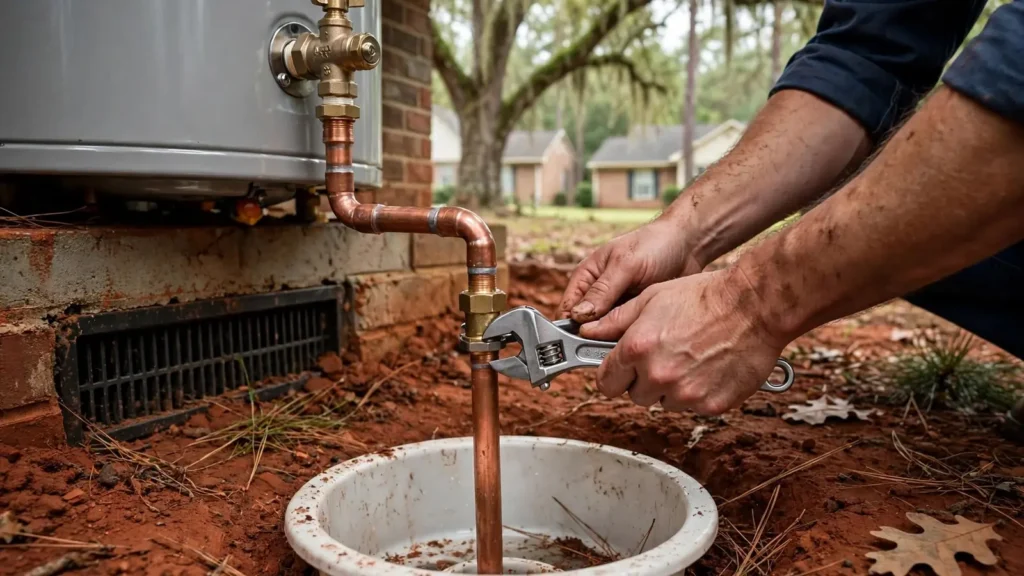
You don't need to take anything apart. Look at the drain pan for water, and at the base of the tank for rust or crust. Look at the temperature and pressure relief valve and the pipe that runs down from it. A drip there can mean high pressure, often from thermal expansion in a house with a backflow device or pressure-reducing valve at the meter. Note the age from the serial label; our water heater repair page explains how to read it.
Flushing a few gallons out of the drain valve to clear sediment is a reasonable spring habit for a tank that's been flushed before. On an old tank that never has been, a stuck or leaking drain valve is a real risk, so it may be better left to a plumber. If you're wondering about the temperature setting, our water heater replacement guide covers it.
Sump pump, gutters and storm season
Spring storms in the Upstate can drop a lot of rain in an hour. Before the first big one, test the sump pump if you have one: pour a bucket of water into the pit, watch the float lift and the pump kick on, and go outside to confirm the water comes out of the discharge line and flows away from the house. If the pump hums but doesn't move water, or the float sticks against the pit wall, fix it now, not during a storm.
Gutters fill up fast in April with pine pollen, seed pods and the catkins that drop off oaks. Clean them once the trees are done, and check that every downspout empties well away from the foundation. A downspout dumping at the corner of the house is one of the most common reasons for a wet crawlspace.
Heavy rain also strains sewers. If your toilets gurgle or a floor drain backs up when it pours, find your sewer cleanout now and read our sewer backup guide so you know who to call.
Check the whole house for hidden leaks
The EPA runs its Fix a Leak Week every March, and its numbers are a good reason to spend ten minutes here. The agency says an average household's leaks can waste more than 9,300 gallons a year, and that nine percent of homes have leaks wasting 50 gallons or more a day. Most of that is toilets, dripping faucets and showerheads.
- Read the meter. With every fixture off, look at the leak indicator on your water meter. If it's turning, something is running.
- Do a dye test on each toilet: a few drops of food coloring in the tank, wait 15 minutes without flushing, and look for color in the bowl.
- Look under every sink for damp cabinet floors and swollen particle board.
- Check the washing machine hoses for bulges and cracks near the fittings. Rubber hoses past five years or so are cheap to replace and expensive when they fail.
If the meter shows a leak and you can't find it, our leak detection guide covers the next steps.
What to fix yourself and what to call about
Honestly, most of this list is looking. The fixes split pretty cleanly:
- You can usually handle a toilet flapper, a new washing machine hose, putting pipe sleeves back, a clogged gutter and resetting a sprinkler head.
- Call a plumber for a frost-free faucet that leaks inside the wall, any leak in the crawlspace you can't reach the source of, a dripping water heater relief valve, a cracked backflow device, or a meter that shows a leak you can't find.
- A backflow test for Greenville Water has to be done by a state-certified tester, and many plumbing companies have one on staff.
For what these repairs typically cost, see our Greenville plumber cost guide. Ask for a written price before work starts.
Found a leak on your spring walk-through? Call a local plumber
Spring plumbing questions
When is it safe to turn my sprinklers back on in Greenville?
Clemson Extension's average last frost date for the SC Piedmont is April 15, so mid-to-late April is a reasonable target. Freezes have hit Greenville-Spartanburg as late as May 10, so watch the forecast and be ready to drain the backflow device again if a hard freeze shows up.
How can I tell if my outdoor faucet split over the winter?
Run it with someone watching the inside wall, crawlspace or basement behind it, then attach a hose with a closed nozzle and run it again. Water anywhere inside means the faucet's tube likely split and the faucet needs replacing.
Should I take the foam covers off my outdoor faucets in March?
You can, but keep them handy. A March cold snap is common in the Upstate. Store the covers near the door rather than in the attic until May.
Does a water heater need to be flushed every spring?
It doesn't have to be spring, but draining a few gallons once a year helps clear sediment on a tank that's been maintained. On an old tank that's never been flushed, the drain valve may stick or leak, so consider having a plumber do it.
What should I look for in my crawlspace after winter?
Fallen pipe insulation, drips at fittings, wet or sagging insulation between joists, and water sitting on top of the vapor barrier. Water on top of the plastic usually came from the house above.
Sources
- Clemson Cooperative Extension, Home and Garden Information Center, "A Lazy Gardener Considers the Subtleties of the Season" (average last frost date, SC Piedmont).
- National Weather Service Greenville-Spartanburg, "Freezing and Sub-Freezing Temperatures, Greenville-Spartanburg, SC, 1874 to Present" (dates of last occurrence of 32 degrees or lower).
- Woodford Manufacturing (WCM Industries), freezeless wall faucet troubleshooting guide and installation instructions.
- Greenville Water, Irrigation Meter Policy (rain sensor and WaterSense controller requirement) and Cross Connection Control Manual (2022).
- U.S. Environmental Protection Agency, WaterSense Fix a Leak Week materials (household leak estimates).