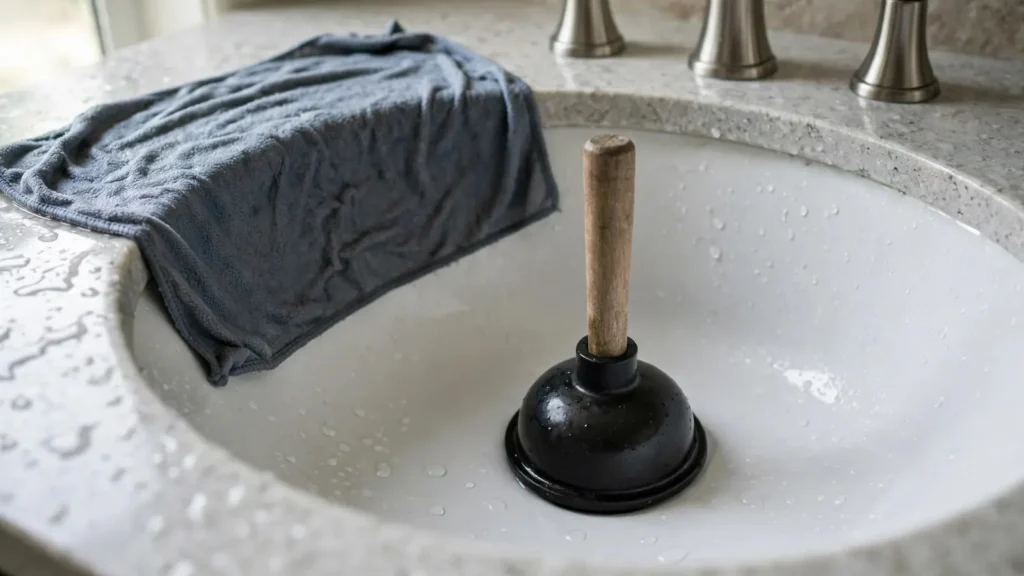
One clog is bad luck. A toilet that keeps clogging every week or two is telling you something, and plunging it harder each time won't fix the cause. The same handful of causes show up again and again in Greenville County homes, and most of them can be sorted out with a little detective work before anyone spends money.
This guide covers how to figure out which cause you have, how to plunge and auger a toilet properly (most people do it wrong), what's going on with "flushable" wipes in local sewers, and what to look for if the answer is a new toilet.
Toilet keeps clogging? First, is it one toilet or the whole house?
This single question sorts most cases.
| What you see | Points to | Who handles it |
|---|---|---|
| Only one toilet clogs; sinks and tubs drain fine | The toilet itself: design, a lodged object, or how it's used | Usually DIY first |
| Toilet flushes slowly and gurgles, other drains in that bathroom are slow too | A blocked branch line or a vent problem | DIY check, then a plumber |
| Water rises in the tub or shower when the toilet flushes | A blockage downstream of both, often the main line | Plumber |
| Several toilets clog, or the lowest drain in the house backs up | Main sewer line: roots, a sag, a collapse, grease or wipes | Plumber, and possibly the sewer provider |
| Toilet bubbles when the washer drains | Partial main line blockage | Plumber |
If it's the whole house, skip ahead to the main line section. Our drain cleaning guide also has a quick test for telling one drain from the main.
Cause one: an early 1.6-gallon toilet
The Energy Policy Act of 1992 set 1.6 gallons per flush as the federal maximum for new toilets, with the residential limit taking effect in the mid-1990s. Manufacturers had to cut water use by more than half compared with the 3.5-gallon toilets of the 1980s, and many of the first designs were simply older bowls with less water. They clogged. Toilets from roughly the mid-1990s to the early 2000s have a reputation in the trade for weak flushes, and that reputation is earned.
Toilet engineering improved a lot after that, partly because of independent testing (more on MaP scores below). A modern 1.28-gallon WaterSense toilet usually flushes far better than a 1996 model using 1.6 gallons. A big share of the housing in places like Mauldin, Simpsonville and Greer went up in the 1990s and 2000s, so plenty of builder-grade toilets from that era are still in service. If yours has a date stamped inside the tank lid or on the back of the tank from those years, and it clogs with normal use, the toilet may be the whole problem.
Signs it's the design and not a blockage:
- The bowl drains fine with water alone but struggles with paper.
- The water spot in the bowl is small, and the flush feels weak even right after an auger run.
- The tank's water level is already at the mark and the flapper opens fully, and it still doesn't clear.
Check the easy stuff before you blame the design. A water level set too low or a chain so long that the flapper drops shut early both cut flush strength. Our running toilet guide covers adjusting both.
Cause two: something stuck in the trap
A toilet's trap is a curved channel cast into the porcelain. A small toy, a comb, a toothbrush, a pill bottle cap or a wad of dental floss can wedge in there sideways. Water still gets past, so the toilet seems to work, but paper catches on the object and builds up. You plunge, it clears, and a few days later it clogs again.
That pattern, frequent clogs that come back quickly after plunging, is a strong hint. Kids in the house make it more likely. A closet auger will sometimes snag the object and pull it back out. If it doesn't, the toilet has to come off the floor so the object can be pushed out from the bottom. That's a job many handy homeowners can do, but it means a new wax ring and resetting the bolts, and it's easy to crack a bowl or end up with a leak at the base.
Cause three: wipes, and too much paper
"Flushable" on a package means the wipe will go down the toilet. It doesn't mean it will break down in the pipe. Local sewer agencies are blunt about this. MetroConnects, which runs sewer collection for most of unincorporated Greenville County, runs a "No Wipes Down the Pipes" message and says that even when a product claims to be flushable, wipes don't belong in the sewer. ReWa, which treats wastewater for most of the county, lists household wipes among its no-flush items and says the only safe item to flush is toilet paper.
Nationally, the National Association of Clean Water Agencies has pushed for years for flushability labels to meet standards that wastewater utilities agree to, because the industry's own test methods didn't reflect real sewer conditions. Until that's settled, treat every wipe as trash.
Wipes hurt you before they ever reach the public sewer. They snag on the rough inside of old cast-iron pipe, on a joint offset in a clay line, or on the first tree root that's found its way in. Then paper and waste pile up behind them. It is one of the most common reasons a house that "never had a problem" suddenly starts clogging after a new household member moves in.
Other things that don't belong in a toilet: paper towels, tissues (they're made to hold together when wet), cotton swabs and balls, feminine products, dental floss, cat litter, and grease.
Toilet clogging again and again? Call a local plumber
How to plunge a toilet the right way
Use a flange plunger, the kind with a soft sleeve that folds out of the bottom of the cup. A flat cup plunger can't seal in a toilet's drain opening.
- Don't flush again if the bowl is full. If it's close to overflowing, take the tank lid off and push the flapper closed by hand, or close the shut-off valve behind the toilet.
- Get enough water in the bowl to cover the plunger cup. You're pushing water, not air.
- Seat the flange in the drain opening and press down gently first to push out trapped air. A hard first stroke just sprays the bathroom.
- Pump firmly in and out 15 to 20 times without breaking the seal. The pull stroke matters as much as the push.
- Lift off and watch. If the water drops away, pour a bucket of water into the bowl to test before you flush.
- Repeat a couple of rounds. If it still won't clear, move to the auger.
Using a closet auger
A closet auger (also sold as a toilet auger) is a short cable inside a rigid tube with a crank on top and a curved end wrapped in a rubber or vinyl sleeve. The sleeve protects the porcelain. Don't use a regular drum snake in a toilet; the bare cable scratches the bowl and leaves gray marks that are hard to remove.
- Pull the cable back into the tube so only the tip shows.
- Set the curved end in the bowl with the bend pointing up into the trap, which on most toilets runs toward the back.
- Push the cable down while turning the crank clockwise. It will snake through the trap's bends. Most closet augers reach 3 to 6 feet, which covers the whole trap.
- When you feel resistance, keep cranking and work back and forth. Soft clogs break up. A hard object may hook on the tip.
- Crank as you pull it back out, so whatever caught comes with it.
- Test with a bucket of water, then flush.
If the auger goes all the way through easily and the toilet still clogs within days, the problem is likely past the toilet: in the branch line, the vent or the main.
Cause four: a blocked plumbing vent
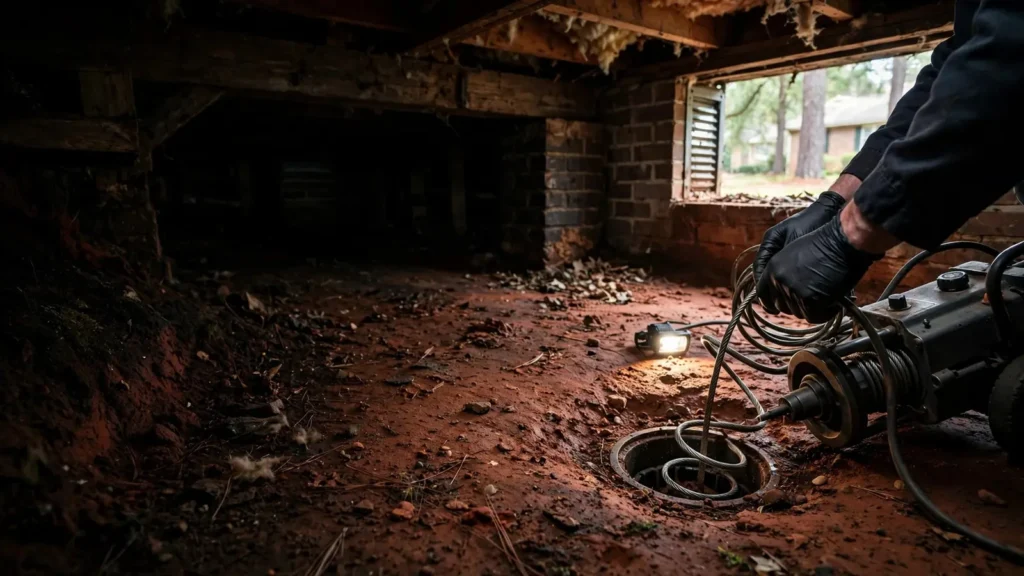
Every drain needs air behind it to flow fast. That air comes through vent pipes that exit through the roof. When a vent gets blocked by leaves, a bird or wasp nest, or debris from roofing work, the toilet flushes sluggishly, the water in the bowl may rock or drop between flushes, and drains gurgle. You might also notice sewer odor.
A vent problem rarely causes a hard clog on its own, but it weakens every flush, so paper that would normally clear gets left behind. A plumber can run a cable or water down the vent from the roof, or check it with a camera. We don't recommend climbing on the roof yourself, especially on a two-story house with a steep pitch.
Cause five: the main sewer line
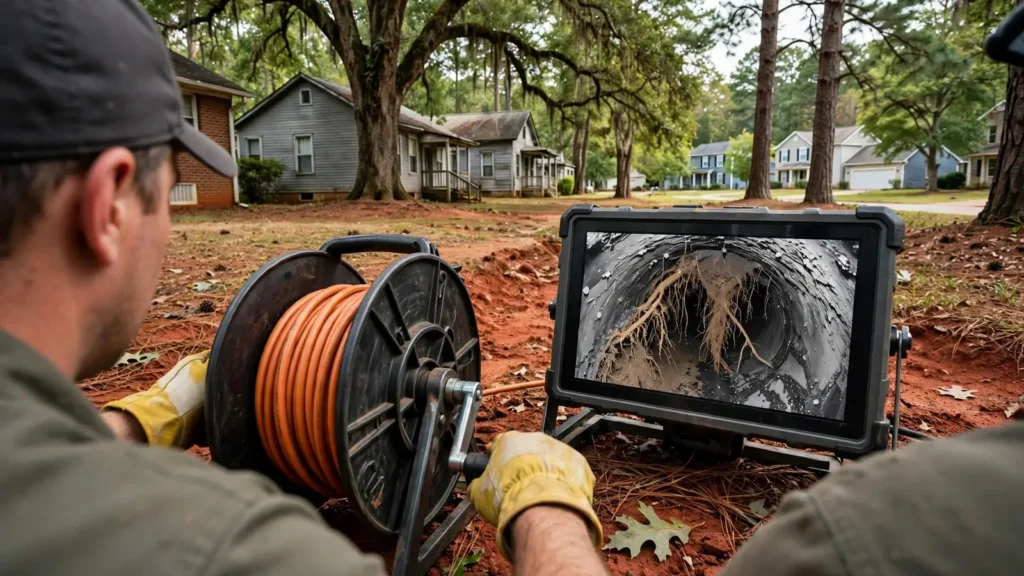
If more than one fixture is involved, think main line. In older Greenville neighborhoods, sewer laterals are often clay or cast iron, and roots get into clay joints, especially from big oaks and maples in the yard. Older homes can also have Orangeburg pipe or cast iron with heavy scale, both of which narrow the line over time. Our Wade Hampton page covers those materials in mid-century houses.
A sewer camera inspection is the honest way to find out what's going on. It shows roots, sags where waste settles, broken sections and grease. Our sewer line repair guide explains the repair choices once you know.
Two important points:
- If sewage is coming up from a floor drain, a shower or the lowest toilet, stop using water and read our sewer backup guide first.
- The line from your house to the public main is usually the homeowner's to maintain, but the public main is not. If a backup might be in the street, MetroConnects or your city sewer provider should be called. Our page on who owns the water and sewer line explains where the split is.
On septic, which is common in northern Greenville County and around Travelers Rest, repeated toilet clogs can also mean a full tank or a failing drain field. Wipes are especially hard on septic systems.
Buying a toilet that won't clog: what MaP scores mean
If you've decided the toilet is the problem, look up its MaP score before you buy. MaP (Maximum Performance) testing is an independent program that flushes progressively larger test loads through a toilet until it fails. The score, in grams, is the largest load it cleared in one flush. The top of the scale is 1,000 grams.
- EPA's WaterSense label requires a toilet to pass at 350 grams. That's a pass/fail floor, not a ranking.
- MaP's own Premium rating requires at least 600 grams of waste removed per flush while using 1.1 gallons or less.
- For a household that's had clogging trouble, we'd shop for a score of 800 grams or higher.
Other features that help: a fully glazed trapway, so paper doesn't catch, and a 3-inch flush valve instead of the older 2-inch size. Bowl shape and seat height don't affect clogging. Published installed prices for the Greenville area are on our plumber cost guide.
Several drains slow at once? Call a local plumber
Toilet clog questions
Why does my toilet clog every time I use more than a little paper?
Usually it's either an early low-flow design that doesn't move much water, a tank level set too low, or something partly blocking the trap. Check the water level and flapper first, then run a closet auger. If it still happens, the toilet itself is the likely cause.
Are septic-safe wipes okay to flush?
No. MetroConnects and ReWa both say wipes belong in the trash, whatever the label says, and septic tanks don't break them down well either. The only thing besides human waste that should go in the toilet is toilet paper.
Can hot water unclog a toilet?
Sometimes, for a soft clog of paper and waste. Use hot tap water with a squirt of dish soap, poured from waist height, and let it sit. Don't use boiling water; it can crack the porcelain or melt a wax ring.
What is a good MaP score for a toilet?
WaterSense toilets must pass at 350 grams, and MaP Premium toilets clear at least 600 grams. For a house with a history of clogs, a toilet scoring 800 to 1,000 grams is a safer choice.
Sources
- MetroConnects, How to Protect Your Sewer System ("No Wipes Down the Pipes"), checked Oct 2026.
- ReWa (Renewable Water Resources), Protecting Pipes page (household wipes on no-flush list; toilet paper the only safe item to flush), checked Oct 2026.
- National Association of Clean Water Agencies, letters on wipes flushability labeling, March and April 2016.
- MaP Testing, MaP Premium criteria (600 grams, 1.1 gpf or less) and scoring method, checked Oct 2026.
- U.S. EPA WaterSense, Residential Toilets page and toilet specification (1.28 gpf; 350-gram performance threshold), checked Oct 2026.
- Energy Policy Act of 1992 (1.6 gallons per flush federal maximum for new toilets).